
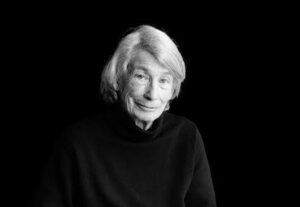
A summary of our talk for U3A on Mary Oliver
Colleen & Michael Keating
“Whoever you are, no matter how lonely,
the world offers itself to your imagination” Mary Oliver
I love reading and being inspired by Mary Oliver. Her language is fresh and crisp:
simple and ordinary in a way
that wisdom is always simple. and ordinary. Her imagery is rich and memorable.
I think of her as a technician of the sacred. And she is one of my guides to the natural world.
And I keep discovering her imagery over and over
I hope you enjoy getting to know her too.
Michael
*Mary Olive was Born September 10th 1935 in Ohio
*An American poet who has won the National Book Award and the Pulitzer Prize for Poetry.
*The NY Times described her as “far and away America’s best-selling poet.”
*Her poetry turns towards nature for its inspiration and she describes the sense of wonder it instills in her. eg
“when its over I want to say,
“all my life I was a bride
married to amazement.
I was a bridegroom
taking the world into my arms.” (When death comes)
When she left school in 1953 she wanted to get away from her oppressive family situation and on a whim
visited Steppletop the home of Edna St Vincent Millay which was a centre of writing and poetry.
and made friends with Millay’s sister Norma and Mary Oliver stayed there and helped over the next few years
to collate the papers of this late poet.
One day on a visit there she met the photographer Molly Malone Cook, they fell in love as she says:
“I took one look and fell,
hook and tumble”
and set up home together, settling in Provincetown in Massachusetts. That was in 1960 and her partner died after 40 years in 2005
and Mary Oliver continued to live there. and died on the 17th January 2019. We have noted at lease 25 published books of poetry.
Colleen
*Her poetry is grounded in memories of her early life in Ohio and her adopted home in Provincetown in New England.
Most of the imagery in her poetry is found in and around her home.
*She reminds me of Emily Dickinson both having an affinity for solitude and an interior reflective
voice and both inspired by their immediate surrounds.
*A clear and poignant observer of the natural world . Her creativity is stirred by nature and accessed through walking .
*She acknowledges strong influence from two early Nature poets Whitman and Thoreau
Her idols also included the Romantics Shelley and Keats. And as we will notice even in the first poem
she show reference to Rilkie .
Sometimes I feel there is a Rumi influence too.
*Her writings are filled with the imagery from her daily walks near her home.
shore birds, water snakes, grasshoppers, sunflowers ,phases of the moon,
dawn, forests, light .
She says:
“I go to my woods, my ponds,
my sun-filled harbour,
no more then a blue comma
on the map of the world
but to me the emblem of everything”
*She has been called “a patroller of wetlands “ as Thoreau is called “an inspector of snow storms”
*She uses unadorned language and accessible themes
Michael
*A poet of Wisdom e.g. on Pinterest there are pages of people who have been captured by her wisdom,
using lines from her poems to create posters and banners . A few years back we found her words
on grand posters all over the walls and poles of our local McDonalds restaurant.
I think because she grapples and identifies the essence of the matter and has the ability to write simple succinct lines
and her words are spare she is accessible to the reader.
Colleen
*And what I love she can describe ecstasy while retaining a practical awareness of the world as one of predators and prey.
Being in the paradox of the agony and ecstasy
_______________________________________________________________________________________________
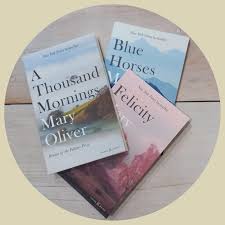
Here are the poems we read and pondered together, finding the collective wisdom of our great U3A Poetry Appreciation Group
Invitation
Peonies
When I am among the trees
The Summer Day
The Journey
Wild Geese
The Fish
The Poet With His Face In His Hands
How I go to the woods
When death comes
Swan
I Worried
Self–portrait
Can You Imagine
Sleeping in the Wood
That Little Beast