
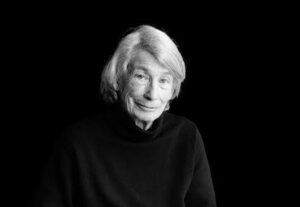
Mary Oliver
Colleen & Michael Keating
“Whoever you are, no matter how lonely,
the world offers itself to your imagination” Mary Oliver
I love reading and being inspired by Mary Oliver. Her language is fresh and crisp:
simple and ordinary in a way
that wisdom is always simple. and ordinary. Her imagery is rich and memorable.
I think of her as a technician of the sacred. And she is one of my guides to the natural world.
And I keep discovering her imagery over and over
I hope you enjoy getting to know her too.
Michael
*Mary Olive was Born September 10th 1935 in Ohio
*An American poet who has won the National Book Award and the Pulitzer Prize for Poetry.
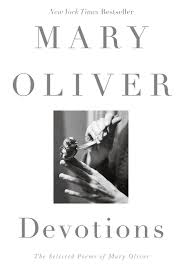
*The NY Times described her as “far and away America’s best-selling poet.”
*Her poetry turns towards nature for its inspiration and she describes the sense of wonder it instills in her. eg
“when its over I want to say,
“all my life I was a bride
married to amazement.
I was a bridegroom
taking the world into my arms.” (When death comes)
When she left school in 1953 she wanted to get away from her oppressive family situation and on a whim
visited Steppletop the home of Edna St Vincent Millay which was a centre of writing and poetry.
and made friends with Millay’s sister Norma and Mary Oliver stayed there and helped over the next few years
to collate the papers of this late poet.
One day on a visit there she met the photographer Molly Malone Cook, they fell in love as she says:
“I took one look and fell,
hook and tumble”
and set up home together, settling in Provincetown in Massachusetts. That was in 1960 and her partner died after 40 years in 2005
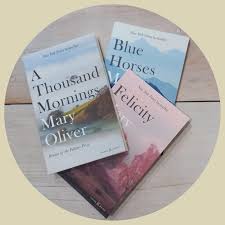
and Mary Oliver continued to live there. and died on the 17th January 2019. We have noted at lease 25 published books of poetry.
Colleen
*Her poetry is grounded in memories of her early life in Ohio and her adopted home in Provincetown in New England.
Most of the imagery in her poetry is found in and around her home.
*She reminds me of Emily Dickinson both having an affinity for solitude and an interior reflective
voice and both inspired by their immediate surrounds.
*A clear and poignant observer of the natural world . Her creativity is stirred by nature and accessed through walking .
*She acknowledges strong influence from two early Nature poets Whitman and Thoreau
Her idols also included the Romantics Shelley and Keats. And as we will notice even in the first poem
she show reference to Rilkie .
Sometimes I feel there is a Rumi influence too.
*Her writings are filled with the imagery from her daily walks near her home.
shore birds, water snakes, grasshoppers, sunflowers ,phases of the moon,
dawn, forests, light .
She says:
“I go to my woods, my ponds,
my sun-filled harbour,
no more then a blue comma
on the map of the world
but to me the emblem of everything”
*She has been called “a patroller of wetlands “ as Thoreau is called “an inspector of snow storms”
*She uses unadorned language and accessible themes
Michael
*A poet of Wisdom e.g. on Pinterest there are pages of people who have been captured by her wisdom,
using lines from her poems to create posters and banners . A few years back we found her words
on grand posters all over the walls and poles of our local McDonalds restaurant.
I think because she grapples and identifies the essence of the matter and has the ability to write simple succinct lines
and her words are spare she is accessible to the reader.
Colleen
*And what I love she can describe ecstasy while retaining a practical awareness of the world as one of predators and prey.
Being in the paradox of the agony and ecstasy
(Lets read and enjoy.from Judth beveridge)
Writers On Writing / / Making Space for the Inner Life: Judith Beveridge on Poetry & Spirituality
One of the dangers that we face as a culture, with so much of the natural world disappearing, with so much of the environment
slipping into degradation and so much of it reduced to cityscape, pop culture and consumerism, is that people can easily
slip into self-centredness and lack of attention. We are quickly losing a direct, intimate connection with the things we depend
upon for survival. Poetry is a great tool through which human relations to nature can be called to account, as well as exalted.
Writing and reading poetry forces us, if we are to become any good at it, to pay attention. Mary Oliver, the American nature poet, says:
Before we move from recklessness to responsibility, from selfishness to a decent happiness, we must want to save our world. And in order to want to save our world we must learn to love it — and in order to love it we must become familiar with it again. That is where my work begins, and why I keep walking, and looking.
Her extraordinary poetry was nourished by her intimate knowledge and minute daily observation of the New England coast, its woods and ponds, its birds and animals, plants and trees.
Just pay attention she says to the natural world around ypu the goldfinches, swans, the wild geese They will tell you what you need to know. With a few exceptions Olives poems don’t end in thunderbolts There is a gentle form of moral direction.
Mary Oliver and Robert Frost are both revered American poets celebrated for their profound engagement with nature and pastoral settings, often using, respectively, free verse and traditional meter to explore the human condition. While Frost is often associated with a darker, more stoic view of nature and mortality, Oliver is known for finding, and urging joy in, the quiet, wild beauty of the natural world, often echoing and expanding on his themes.
The poetry we chose for our meeting was aimed to be uplifting for us all as part of our first Meeting for 2026.
_____________________________________________________________________________________________________________________
Invitation
Oh do you have time
to linger
for just a little while
out of your busy
and very important day
for the goldfinches
that have gathered
in a field of thistles
for a musical battle,
to see who can sing
the highest note,
or the lowest,
or the most expressive of mirth,
or the most tender?
Their strong, blunt beaks
drink the air
as they strive
melodiously
not for your sake
and not for mine
and not for the sake of winning
but for sheer delight and gratitude—
believe us, they say,
it is a serious thing
just to be alive
on this fresh morning
in the broken world.
I beg of you,
do not walk by
without pausing
to attend to this
rather ridiculous performance.
It could mean something.
It could mean everything.
It could be what Rilke meant, when he wrote:
You must change your life.
2008 from Red Bird
Peonies
This morning the green fists of the peonies are getting ready
to break my heart
as the sun rises,
as the sun strokes them with his old, buttery fingers
and they open–
pools of lace,
white and pink–
and all day the black ants climb over them,
boring their deep and mysterious holes
into the curls,
craving the sweet sap,
taking it away
to their dark, underground cities–
and all day
under the shifty wind,
as in a dance to the great wedding,
the flowers bend their bright bodies,
and tip their fragrance to the air,
and rise,
their red stems holding
all that dampness and recklessness
gladly and lightly,
and there it is again–
beauty the brave, the exemplary,
blazing open.
Do you love this world?
Do you cherish your humble and silky life?
Do you adore the green grass, with its terror beneath?
Do you also hurry, half-dressed and barefoot, into the garden,
and softly,
and exclaiming of their dearness,
fill your arms with the white and pink flowers,
with their honeyed heaviness, their lush trembling,
their eagerness
to be wild and perfect for a moment, before they are
nothing, forever?
1992 from New & Selected Poems Vol 1
When I am among the trees
When I am among the trees,
especially the willows and the honey locust,
equally the beech, the oaks and the pines,
they give off such hints of gladness.
I would almost say that they save me, and daily.
I am so distant from the hope of myself,
in which I have goodness, and discernment,
and never hurry through the world
but walk slowly, and bow often.
Around me the trees stir in their leaves
and call out, ”Stay awhile.”
The light flows from their branches.
And they call again, ”It’s simple,” they say,
”and you too have come
into the world to do this, to go easy, to be filled
with light, and to shine.”
2006 from Thirst
The Summer Day
Who made the world?
Who made the swan, and the black bear?
Who made the grasshopper?
This grasshopper, I mean– the one who has flung herself out of the grass,
the one who is eating sugar out of my hand,
who is moving her jaws back and forth instead of up and down–
who is gazing around with her enormous and complicated eyes.
Now she lifts her pale forearms and thoroughly washes her face.
Now she snaps her wings open, and floats away.
I don’t know exactly what a prayer is.
I do know how to pay attention, how to fall down
into the grass, how to kneel down in the grass,
how to be idle and blessed, how to stroll through the fields,
which is what I have been doing all day.
Tell me, what else should I have done?
Doesn’t everything die at last, and too soon?
Tell me, what is it you plan to do
with your one wild and precious life?
1992 . from New & Selected Poems Vol 1
The Journey
One day you finally knew
what you had to do, and began,
though the voices around you
kept shouting
their bad advice-
though the whole house
began to tremble
and you felt the old tug
at your ankles.
“Mend my life!”
each voice cried.
But you didn’t stop.
You knew what you had to do,
though the wind pried
with its stiff fingers
at the very foundations –
though their melancholy
was terrible.
It was already late
enough, and a wild night,
and the road full of fallen
branches and stones.
but little by little,
as you left their voices behind,
the stars began to burn
through the sheets of clouds,
and there was a new voice
which you slowly
recognised as your own,
that kept you company
as you strode deeper and deeper
into the world,
determined to do
the only thing you could do-
determined to save
the only life you could save.
1986 from Dream Work
Wild Geese
You do not have to be good.
You do not have to walk on your knees
for a hundred miles through the desert, repenting.
You only have to let the soft animal of your body love what it loves.
Tell me about despair, yours, and I will tell you mine.
Meanwhile the world goes on.
Meanwhile the sun and the clear pebbles of the rain
are moving across the landscapes,
over the prairies and the deep trees,
the mountains and the rivers.
Meanwhile the wild geese, high in the clean blue air,
are heading home again.
Whoever you are, no matter how lonely,
the world offers itself to your imagination,
calls to you like the wild geese, harsh and exciting-
over and over announcing your place
in the family of things.
1986 from Dream Work
The Fish
The first fish
I ever caught
would not lie down
quiet in the pail
but flailed and sucked
at the burning
amazement of the air
and died
in the slow pouring off
of rainbows. Later
I opened his body and separated
the flesh from the bones
and ate him. Now the sea
is in me: I am the fish, the fish
glitters in me; we are
risen, tangled together, certain to fall
back to the sea. Out of pain,
and pain, and more pain,
we feed this feverish plot, we are nourished
by the mystery.
1983 American Primitive
The Poet With His Face In His Hands
You want to cry aloud for your
mistakes. But to tell the truth the world
doesn’t need anymore of that sound.
So if you’re going to do it and can’t
stop yourself, if your pretty mouth can’t
hold it in, at least go by yourself across
the forty fields and the forty dark inclines
of rocks and water to the place where
the falls are flinging out their white sheets
like crazy, and there is a cave behind all that
jubilation and water fun and you can
stand there, under it, and roar all you
want and nothing will be disturbed; you can
drip with despair all afternoon and still,
on a green branch, its wings just lightly touched
by the passing foil of the water, the thrush,
puffing out its spotted breast, will sing
of the perfect, stone-hard beauty of everything.
2005 from New & Selected Poems Vol Two
How I go to the woods
Ordinarily, I go to the woods alone, with not a single
friend, for they are all smilers and talkers and therefore
unsuitable.
I don’t really want to be witnessed talking to the catbirds
or hugging the old black oak tree. I have my way of
praying, as you no doubt have yours.
Besides, when I am alone I can become invisible. I can sit
on the top of a dune as motionless as an uprise of weeds,
until the foxes run by unconcerned. I can hear the almost
unhearable sound of the roses singing.
If you have ever gone to the woods with me,
I must love you very much.
2010 from Swan
When death comes
When death comes
like the hungry bear in autumn;
when death comes and takes all the bright coins from his purse
to buy me, and snaps the purse shut;
when death comes
like the measle-pox
when death comes
like an iceberg between the shoulder blades,
I want to step through the door full of curiosity, wondering:
what is it going to be like, that cottage of darkness?
And therefore I look upon everything
as a brotherhood and a sisterhood,
and I look upon time as no more than an idea,
and I consider eternity as another possibility,
and I think of each life as a flower, as common
as a field daisy, and as singular,
and each name a comfortable music in the mouth,
tending, as all music does, toward silence,
and each body a lion of courage, and something
precious to the earth.
When it’s over, I want to say all my life
I was a bride married to amazement.
I was the bridegroom, taking the world into my arms.
When it’s over, I don’t want to wonder
if I have made of my life something particular, and real.
I don’t want to find myself sighing and frightened,
or full of argument.
I don’t want to end up simply having visited this world.
1992 New & Selected Poems Vol 1
Swan
Did you too see it, drifting, all night, on the black river?
Did you see it in the morning, rising into the silvery air –
an armful of white blossoms,
a perfect commotion of silk and linen as it leaned
into the bondage of its wings; a snowbank, a bank of lilies,
Biting the air with its black beak?
Did you hear it, fluting and whistling
a shrill dark music, like the rain pelting the trees
like a waterfall
knifing down the black ledges?
And did you see it, finally, just under the clouds –
a white cross streaming across the sky, its feet
like black leaves, its wings like the stretching light
of the river?
And did you feel it, in your heart, how it pertained to everything?
And have you too finally figured out what beauty is for?
And have you changed your life?
2010 from Swan
I Worried
I worried a lot. Will the garden grow, will the rivers
flow in the right direction, will the earth turn
as it was taught, and if not how shall
I correct it?
Was I right, was I wrong, will I be forgiven,
can I do better?
Will I ever be able to sing, even the sparrows
can do it and I am, well,
hopeless.
Is my eyesight fading or am I just imagining it,
am I going to get rheumatism,
lockjaw, dementia?
Finally I saw that worrying had come to nothing.
And gave it up. And took my old body
and went out into the morning,
and sang.
2010 from Swan
Self–portrait
I wish I was twenty and in love with life
and still full of beans.
Onward, old legs!
There are the long, pale dunes; on the other side
the roses are blooming and finding their labor
no adversity to the spirit.
Upward, old legs!
There are the roses, and there is the sea
shining like a song, like a body
I want to touch
though I’m not twenty
and won’t be again but ah! seventy. And still
in love with life. And still
full of beans.
2008 from Red Bird
Can You Imagine
For example, what the trees do
not only in lightening storms
or the watery dark of a summer’s night
or under the white nets of winter
but now, and now, and now – whenever
we’re not looking. Surely you can’t imagine
they don’t dance, from the root up, wishing
to travel a little, not cramped so much as wanting
a better view, or more sun, or just as avidly
more shade – surely you can’t imagine they just
stand there loving every
minute of it, the birds or the emptiness, the dark rings
of the years slowly and without a sound
thickening, and nothing different unless the wind,
and then only in its own mood, comes
to visit, surely you can’t imagine
patience, and happiness, like that.
1983 from American Primitive
Sleeping in the Wood
I thought the earth remembered me,
she took me back so tenderly,
arranging her dark skirts, her pockets
full of lichens and seeds.
I slept as never before, a stone on the river bed,
nothing between me and the white fire of the stars
but my thoughts, and they floated light as moths
among the branches of the perfect trees.
All night I heard the small kingdoms
breathing around me, the insects,
and the birds who do their work in the darkness.
All night I rose and fell, as if in water,
grappling with a luminous doom. By morning
I had vanished at least a dozen times
into something better.
1992 from New & Selected Poems Vol 1
That Little Beast
That pretty little beast, a poem,
has a mind of its own.
Sometimes I want it to crave apples
but it wants red meat.
Sometimes I want to walk peacefully
on the shore
and it wants to take off all its clothes
and dive in.
Sometimes I want to use small words
and make them important
and it starts shouting the dictionary,
the opportunities.
Sometimes I want to sum up and give thanks,
putting things in order
and it starts dancing around the room
on its four furry legs, laughing
and calling me outrageous.
But sometimes, when I’m thinking about you,
and no doubt smiling,
it sits down quietly, one paw under its chin,
and just listens.
2015 Felicity