
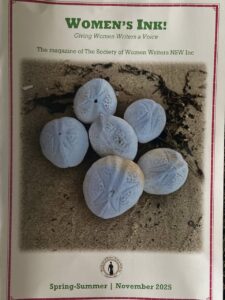
Very excited to have my first piece on Australian Women Writers published in the latest edition of SWW Women’s Ink magazine Spring- Summer November 2025.
Thankyou Janette Conway for such a richly packed and enjoyable edition! A final wonderful edition for our Centenary Year.
My article Ruth Park: A steady glow at the heart of Australian literature is the first in a series I am writing on Australian Women Writers and it was very apt to begin with the wonderful Ruth park who we are proud to call one of our early members of the Society of Women Writers.
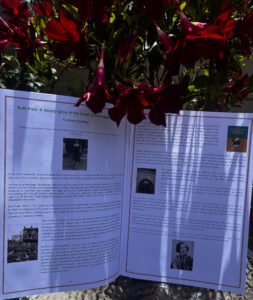
Ruth Park: A steady glow at the heart of Australian literature
“Writing is a passion I have never understood, yet a storyteller is all I have ever wanted to be.”
― Ruth Park
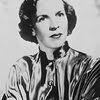
It is a truth universally acknowledged that a good read can change your life. For many of us reading in the 60’s and 70’s in Sydney, the young woman writer, Ruth Park. sparked a lasting literary love affair.
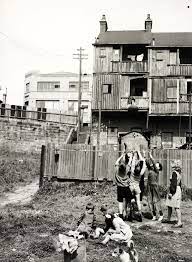
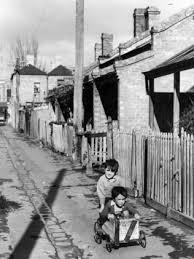
For me as a teenager, finding her debut novel The Harp in the South and later Poor Man’s Orange was my first encounter with poverty and destitute families. Through the eyes of the young Dolours I learnt of unwanted pregnancy, abortion, sex outside marriage, prostitution, child abuse, topics that were taboo at the time. I was seeing life through Dolours dreamy eyes. A bright girl, aspiring to get a good education and escape, ‘get out of the hills’ that being the suburb of Surry Hills which was an inner-west slum, resulting from the depression and wars.
Ruth Park, born in 1917, grew up with a pen in her hand, from when a young girl in Auckland New Zealand. In 1942 she migrated to Australia to marry Australian writer D’Arcy Niland, (The Shiralee) her long-term trans-Tasman journalistic correspondent, and together they embarked on mutually supportive and successful careers as freelance writers.
Historically The Harp in the South won the first Herald Writing Competition and a condition of this award was to be published in instalments in the Sydney Morning Herald. After reading the synopsis many people wrote to the paper to have it banned due to its candour. The paper was swamped with angry letters calling it a cruel fantasy because as far as they were concerned, there were no slums in Sydney! However the newly married Park and Niland did live for a time in Surry Hills and vouched for the novel’s accuracy.
Further it was published in book form in 1948 by Angus & Robertson, who baulked at the novel but had to honour a ‘gentleman’s agreement to publish the winner’.It has gone on to become a classic and never out of print. Park ’s portrayal of an Irish-Australian family living with poverty, ill health, alcoholism was scarifying. We experience the prejudice of religions, life of the Irish, the Chinese green grocer, and early European migrants who had come expecting to find ‘the road cobbled with gold’ only to find it, ‘made of stone harder than an overseer’s heart’. But always Park shows us the warmth and heart wrenching tolerance of each other.
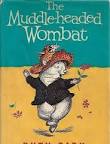
Next for me rearing my own children with the long time radio serial (3,129 episodes) of a wombat who’s brains “rattled beautifully.” and who said his bike bit him when he hurt himself falling off, is also thanks to this prolific woman writer. And how wonderful when with illustrator Noela Young , the characters were brought to life on paper and over a dozen books of the Muddle-Headed Wombat were born. Like many parents of the 60’s and 70’s I have fond memories of these irresistible characters including with Wombat, a good natured female mouse called Mouse and a vain neurotic cat called Tabby.
Today, however what stands out for many young readers is her children novels Playing Beatie Bow, set in what is now called the Rocks Area. A story of children playing a scary game and the young protagonist getting caught into the slip of time, finding her self back in the Rocks of 1870 . Here the young girl Abigail meets a family, is tripped up to stay and falls in love. Abigail, professed to have “the gift” from an old crocheted collar on her dress, returns to find the parallel world of friendship and love in reality.
This novel is often on the Primary syllabus and so many children have experienced the Playing Beatie Bow excursion – where they discover the Rocks. Stairs and alleyways and old stone houses are still there, although today renovated and prime real estate.
Ruth Park stands as one of the major twentieth-century Australian writers, with a body of work that spans popular, professional, and literary realms. Her writing has opened social windows onto aspects of early Australian life that were not spoken about in her time.
The reception of Park’s work has been shaped by the high/low cultural divide, further reinforced by prejudices that dismissed female writers as sentimental or popular, rather than serious literary figures. Park fixes her sharp, sympathetic eye on those areas of life that male writers tended to treat downplay or disregard: abortion, the exhausting care of children, the difficulties of long marriage, childbirth, and the pleasures of (married) sex.
Park’s focus on the lives of the most marginalised groups, including working-class men and women, Indigenous peoples and immigrants, shows her as a woman before her time who spoke truth and didn’t allow custom to get in her way. Her lasting impact I believe, is due to the enduring quality of her storytelling and the power of her imaginative vision – her own unique ‘window of life’.
Ruth Cracknell exclaimed her to be “A steady glow at the heart of Australian literature” and in this Centenary Year we are proud to call Ruth Park an early member of our Society of Women Writers.