Mijika yo ya!
Ashiato asaki
Yui-ga-hama.
How brief is this life!
Faint footprints on the sands of
Yui-ga-hama.The name Yui-ga-hama literally means “ Hot Spring Beach.” In Japan, a volcanic country,
there are a number of places where hot water wells up through the sand,
but in the town of Kamakura at its southern boundary, there is a beach known as “ Yui-ga-hama.”'
Each day at all monasteries and temples in Japan the stones are raked freshly.
The previous day's imprints are gone. Calm beauty is restored. Our inner "raking" can be similar,
particularly in an age of profound agitation. What I like best about this haiku is that first line,
also to be remembered each day. How brief indeed is this life! How precious! Stephanie Dowrick 9/4/2026
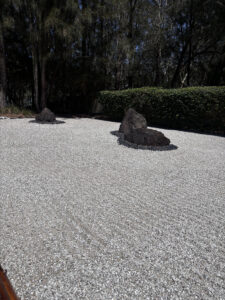
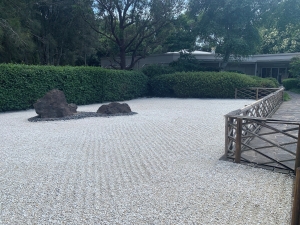
Raked white pebbles at the Edogawa Commemorative Garden at East Gosford
where we meet for our White Pebbles Haiku writing group
in each of the four seasons each year.
On Saturday 13th September, White Pebbles members Beverley George (convenor), Colleen Keating, Kent Robinson, Pip Griffin and Marilyn Humbert gathered for the Spring meeting at the beautiful Gosford/Edogawa Gardens on the Central Coast, NSW.
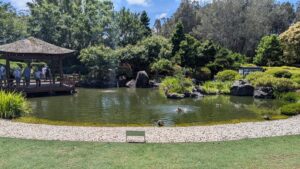
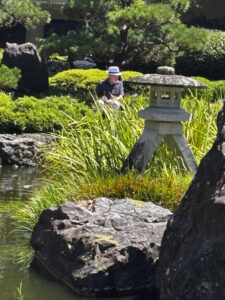
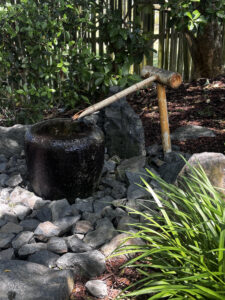
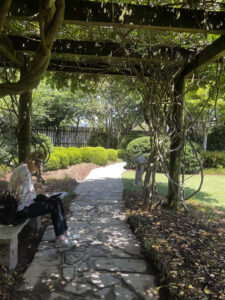
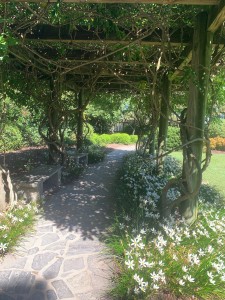
After coffee and greetings, members dispersed to wander solo through the gardens and to observe, listen and jot down thoughts that might lead to haiku. Warmed by sunshine we strolled along curving pathways edged by carefully shaped hedges, and past beds of pink, white and red flowering azaleas. Meandering by the bamboo fountain, we wandered through the wisteria pergola. Standing beside the pond watching the ducks and ducklings amongst swirling koi we were surrounded by children’s laughter and chatter and heard nearby the cascading waterfall. When we sat on a stone bench overlooking the raked white pebble garden in quiet contemplation, we were grateful for the vast variety of colour and sound our walk had yielded.
After 45 minutes, we gathered back at the meeting room to review our musings and offer suggestions. Beverley displayed a bird’s nest, found on the ground after a recent storm, as a prompt. We enjoyed hearing Kent’s adventures whale watching. Colleen spoke about her newly published poetry book, Ring the Bells. Pip shared the excitement of attending Australian World Orchestra playing Mahler Symphonies at the Opera House. Marilyn shared haiku and haibun written in response to her recent camping trip.
The meeting concluded at 12.30pm when members adjourned to the café for lunch and chat.
Next meeting will be on 13th December, celebrating Summer.
Marilyn Humbert
Image: by Deb Robinson
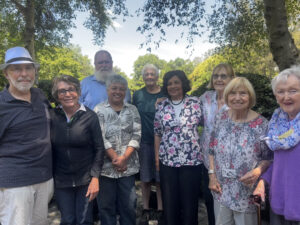
Kent Robinson, Marilyn Humbert, Colleen Keating, Beverley George, Pip Griffin
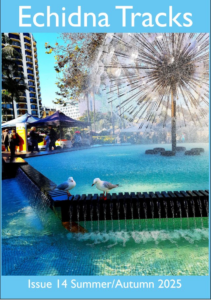
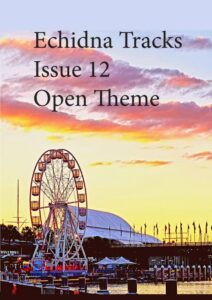
Proud to be included in Issue 14 Summer/Autumn 2025 of Echidna Tracks especially with these talented haikuists.
Thank you to the editors Marilyn Humbert and Simon Hanson for their dedication in working to choose the haiku for the journal and especially for their sensitive and thoughtful placing of our work.
northeasterlies . . .
a fleet of bluebottles
sails into Sydney harbour
Corine Timmer
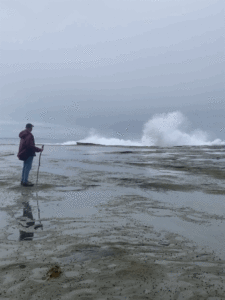
bluebottle tide
silver gulls forage
in seaweed
Vanessa Proctor
ebbing tide— the beachcomber treasures her amble
Colleen Keating
low tide
the setting sun sips
from a salt-rimmed glass
Kathryn Reese
Also wnat to add on my blog Dr. Andy Hede’s haiku published the week later .
voices in the night . . .
the stars maintain
their silence
Elaine Riddell
cloudy night vigil— waiting to see the moon perfectly full
Andrew Hede
peek-a-boo moon
meandering through the creek
a rakali
Corine Timmer
looking for peace—
a rakali carves V-wakes
across the river
Tony Steven Williams
Below is Vol 13 just not sure if I published it before so including here.
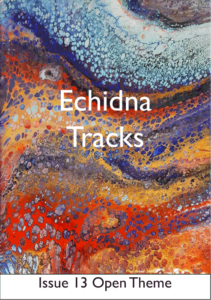
by the river corellas scramble for space solitary ironbark
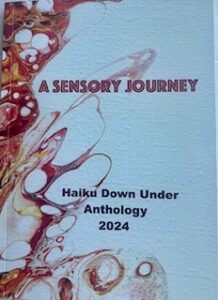
I am very proud and happy to be included in the beautiful new anthology, A Sensory Journey, Haiku Down Under Anthology with my haiku. Thank you to the editors Carole Harrison and Sue Courtney for the beautiful presentation.
holiday cottage
under a sickle moon
a lone dingo howls
Colleen Keating
This photo is the nearest I can find to describe my experience except I was alone in the country holiday cottage for the week ( my choice to write) and it was a dark night hence a small cresent moon only and the dingos howled and howled and I thught a pack was just up on a hill nearby.. It did scare me a little at the time but I have read since that there is nothing to be afraid of as the howling is for a mate. And they don’t come for humans that are not trying to corner them in some way so I tried to show apprehension in the haiku. I hope it works that the reader is not sure!!!
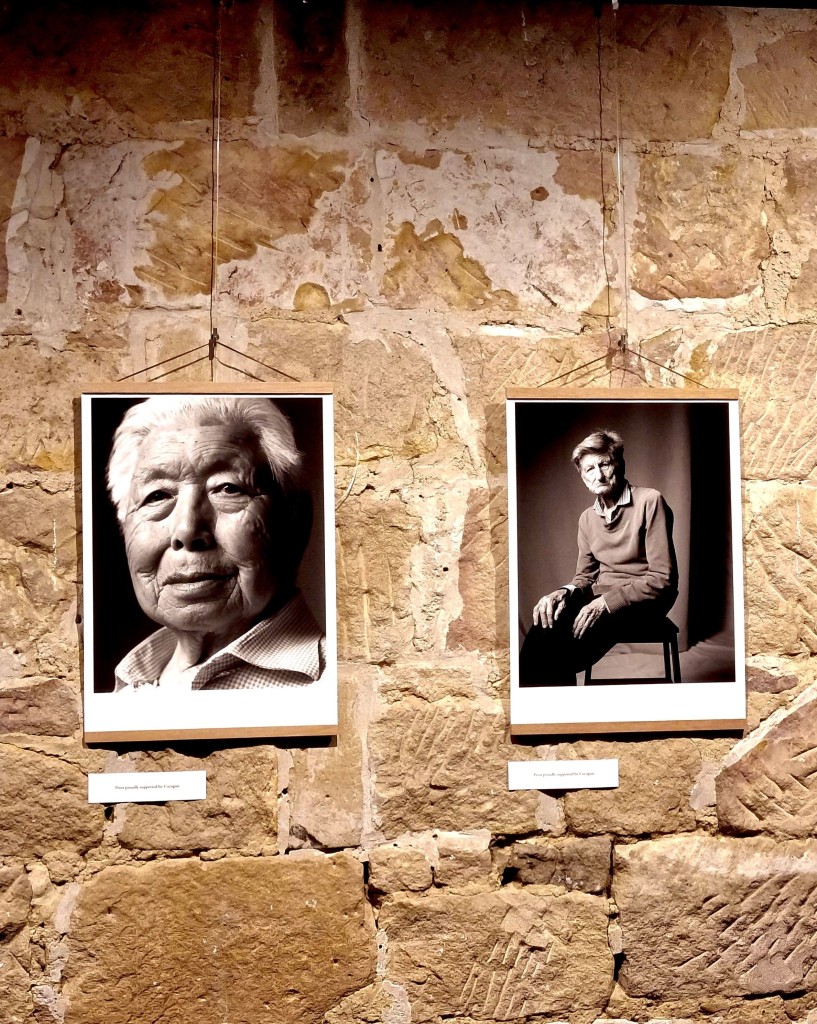
On a warm and sunny Sunday afternoon 25 haiku poets and poetry lovers met in the Gallery, a heritage room in the Kirribilli Neighbourhood Centre to celebrate the Sydney launch of under the same moon: Fourth Australian Haiku Anthology (Forty South, 2023).
Poets travelled from all over Sydney and from as far afield as the Central Coast, Bathurst, Canberra and Coffs Harbour to attend the event.
Vanessa Proctor acted as the MC, introducing the incoming president of the Australian Haiku Society, Leanne Mumford, to speak about haiku and the AHS. Three AHS presidents were present, one current and two past presidents: Vanessa Proctor and Beverley George. Lyn Reeves, who has recently retired from her role as Vice President after 24 years service to the AHS, was recognised for her tireless work for the Society and for Australian haiku.
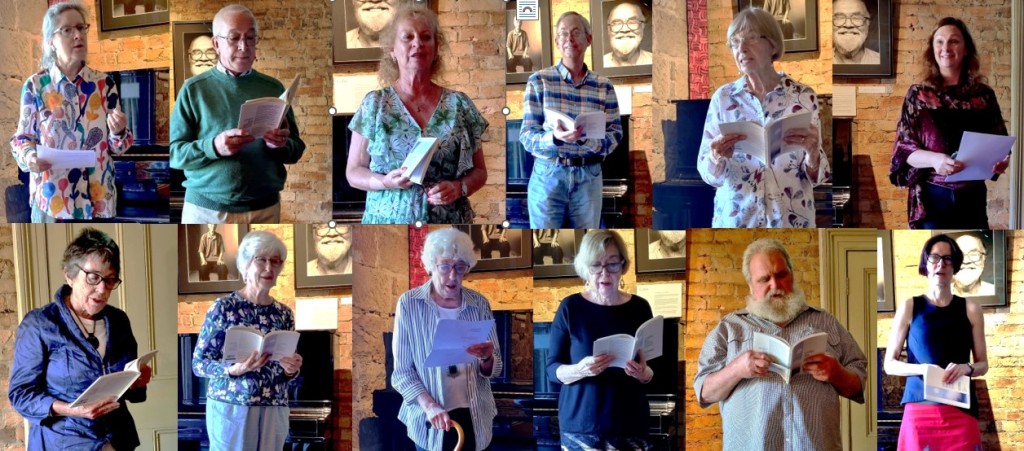
L to R, top row: Leanne Mumford, David George, Laurel Astle, Rohan Buettel, Beverley George, Vanessa Proctor
L to R, bottom row: Colleen Keating, Carol Reynolds, Barbara Fisher, Margaret Mahony, Kent Robinson, Jane Gibian
Vanessa Proctor then spoke about the editorial process with co-editors Lyn Reeves and Rob Scott, the aims for the anthology and the process of selecting the haiku. She examined how the strength of this anthology lies in the quality of its work and the way in which it offers a distinctly Australian view of the world.
As the anthology is dedicated to John Bird and Beverley George, Beverley began the readings with Max Ryan’s haiku in tribute to AHS founder John Bird. David George then read Gregory Piko’s haiku celebrating Beverley’s contribution to Australian haiku.
Contributors went on to read their featured haiku and those of poets who were not able to attend.
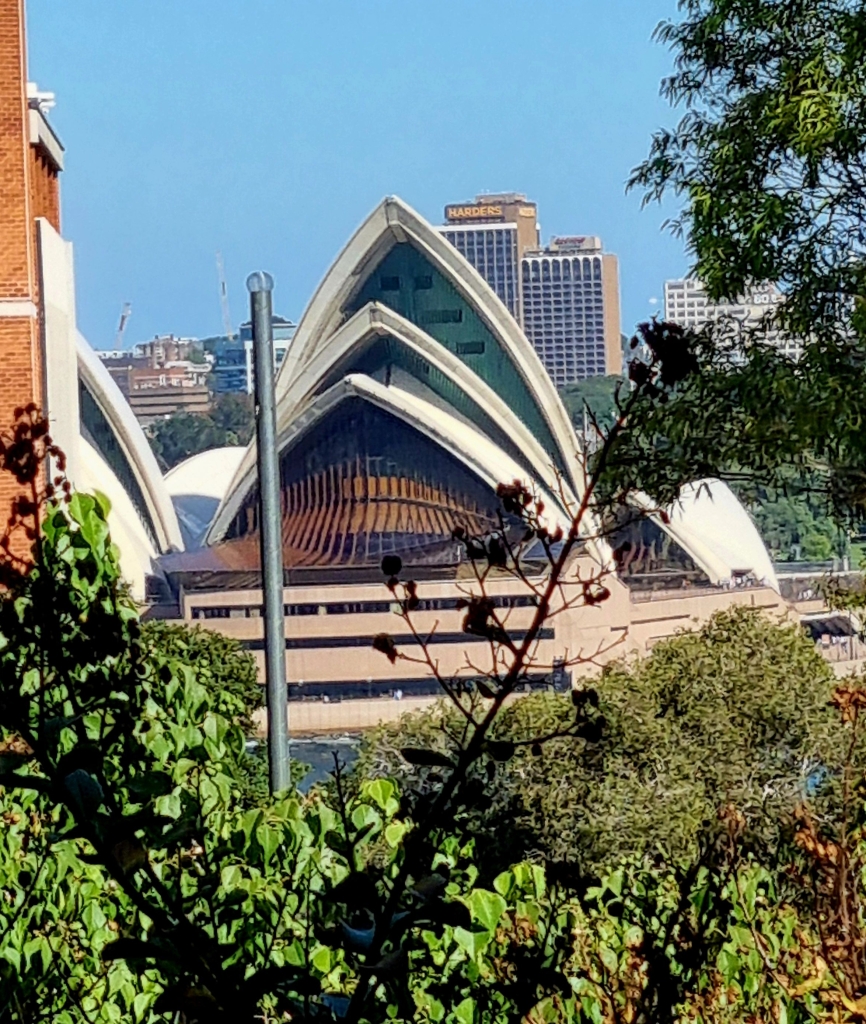
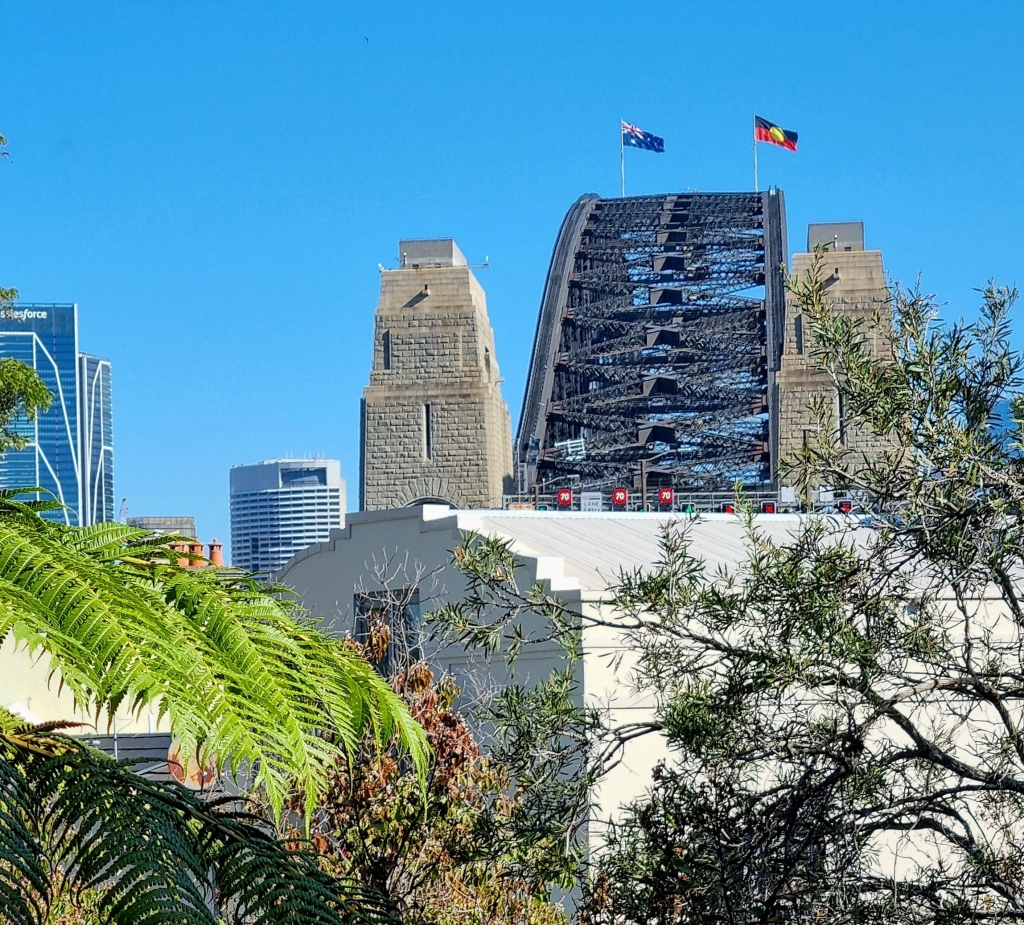
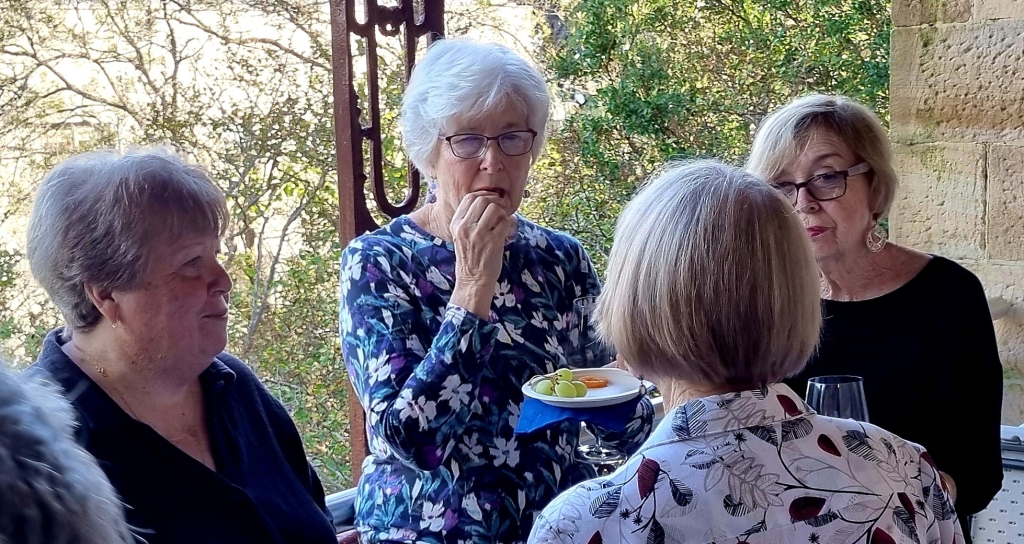
All present celebrated the occasion with food and wine and enjoyed the views from the balcony of the Sydney Harbour Bridge and the Opera House. Books were bought; old connections between poets were rekindled and new connections made. Plans were set in motion for future gatherings of NSW haiku poets.
Vanessa Proctor All photos courtesy of Gavin Austin
A great write up by Vanessa and I just want to add I was proud to read my three published haiku and I enjoyed the beautiful venue of the neighbourhood centre. From the old laced wrought iron verandra we had views of the Opera House and the Harbour bridge. as we sipped our red wine (well some of us ) and we discussed poetry and friendship..
A warm, calm morning greeted the gathering of our White Pebbles haiku poets for our autumn ginko on Saturday 9th March 2024. It was an Indian Summer day. The heady air of gardenias was coloured by a shimmer of dragonflies fussing over the lotus pond with its rush of cascading water. Added to this was chatter and laughter of children. Ducks and koi roiled with enthusiasm as many little fingers dropped pellets of food into the pond from the viewing platform.
Present at our regular venue, Gosford/Edogawa Japanese Gardens and Regional Gallery, were Beverley George, Gwen Bitti, Maire Glacken, Marilyn Humbert, Colleen Keating, Kent Robinson, and Michael Thorley. Apologies had been received from Samantha Sirimanne Hyde and Pip Griffin
In the weeks prior to our meeting, Beverley, our convener, had emailed a worksheet to use as guidance for reflection and sharing. After gathering for catchup and coffee, we set out at 10.30 a.m. on our ginko walk and gathered at 11 a. m. for our workshop. We began by sharing haiku we had written about white pebbles, then our haiku on the word ‘pathway’.
Next we were asked to ponder the Japanese concept of ma, the contained distance and space between objects. We learnt it also refers to time: the intervals between action and event, between sound and silence. We were encouraged to look into the spaces; observe the small things. It was interesting to workshop this idea and listen to the varied responses, including some haiku ready or nearly ready for publishing.
We proudly read our contributions published in Echidna Tracks, and other haiku published elsewhere. Finally we each shared a haiku written by one of the Japanese Masters that we had brought along. A few were able to stay on for lunch at this lovely venue.
Colleen Keating
Member of White Pebbles Haiku Group

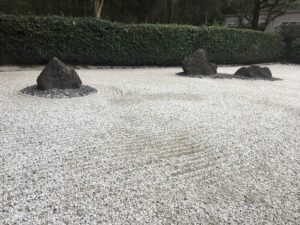
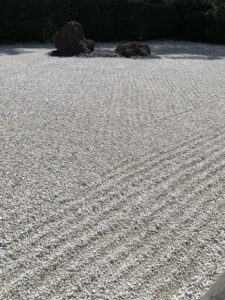
Raked white pebbles at the Edogawa Commemorative Garden at East Gosford where we meet for our White Pebbles Haiku writing group in each of the four seasons each year.