Society of Women Writers, Christmas meeting

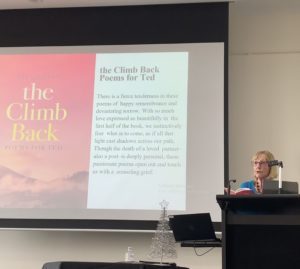
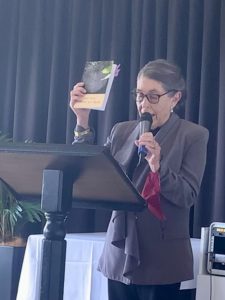
At our recent Society of Women Writers meeting, at the State Library of NSW fellow writer,poet and friend,  Pip Griffin inspired our gathering with her 3  recently published books.  Climbing Back by Pip Griffin and published by Ginninderra Press  was a highlight .  

Pip told us the  story of its development, and read four short evocative poems of grief, and renewal
Her work very much reminding me of Emily Dickenson’s  sensibility.

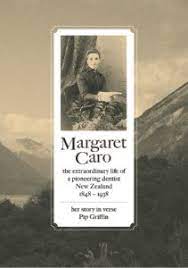
Her award-winning book Margaret Caro, the exraordinary life of a pioneering dentist  was 
displayed as available and Pip read a poem from it to whet our appetite to read more.

Thirdly her poetic book Secret Diaries :an imagined correspondence between Virginia Woofe and the New Zealnad short story writer Katherine Mansfield. As I wrote for the back cover ,

Every life is braided with luminous moments”  John O’Donohue

For those intrigued over the decades about Virginia and Katherine, Pip Griffin turns to their writings, essays, short stories, diaries and personal letters to detail a sense of what constitutes  their intertwining ‘luminous moments’   Pip gives us a window into this intimate and tragic friendship, and with poetic writing full of erotic intrigue captures a sense of provocative possibilities leaving us still with the mystery of their communion to contemplate.  Pip’s poetry at its best.

Colleen Keating

As Pip spoke from the podium I felt very happy. for  . . . . .

we are back. A resplendent  Society of Women Writers meeting.  A welcome-back and farewell to our  year with an enthusiastic group .

The day actually  began with a workshop: Writing with Humour. convened by  Carolyn Eldridge– Alfonzetti A great workshop as it was a gentle way to begin again, humour is important to every genre and  we got a lot of laughter as we got prompts to remember funny stories.

Our poetry reading were fun with some wonderful performances and finally playwright Donna Abela shared her writing journey at the Royal Commission on Institutional Abuse of children – while it is shocking it also shows how writing can transform this into powerful advocacy for children.


Book Launch of Strands and Ripples, a poetry anthology by David Atkinson

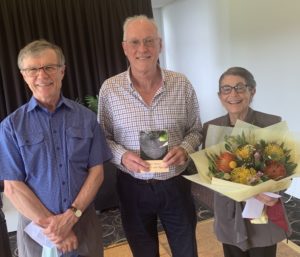
It was an honour to be asked by David to launch his new collection of poetry, Strands and Ripples published by Ginninderra Press.  An excited group of poets, writers, readers, family  and friends  gathered in the Harbourview restaurent of the Golf Club at Northbridge with stunning view of a very blue harbour as the name suggested.   With enthusiasm for our first  gathering and launch  since lockdown and as it was  third time lucky (the launch having been postponed already twice  . . .  it made for an exciting event.
with the toasting of some bubbley to our writing in 2022 and a delicious afternoon tea.
‘In this, his second collection, David Atkinson continues his themes of memory, especially of growing up on a farm in southern NSW, and the natural world, including the wildlife and people that surrounded him then and do so now. In this collection David’s scope is also wider as he extends our perspectives on the human condition. His poems are sharp in their imagery and dramatic in their language. His forms range from the traditional to the stunning use of free verse. This book is highly recommended.’ – John Egan
‘David Atkinson enables us to see things in a new light. Every theme in this collection of poetry challenges us to let him show us aspects of life from a fresh perspective. Widely published in literary journals nationally and internationally, David’s poetry always repays a careful reading. It is with enthusiasm that I welcome this new collection.’
– Colleen Keating
‘David Atkinson’s latest collection is a cornucopia of the poetic spectrum; it confirms that he is one of Australia’s finest poets. David brings a deft touch to the human condition, celebrates the wonders of nature and takes a fresh look at memories. This is a worthwhile addition to any bookshelf.’ – Decima Wraxall
His poems have been published widely in Australia, the USA and the UK. David’s previous collection, The Ablation of Time, was published, also by Ginninderra Press, in 2018. He is a poet of memory, the human condition and the natural world.
978 1 76109 108 7, 120pp

Versions

Paperback

9781761091087
$25.00


LAUNCH SPEECH TO ENCHANT YOUR CURIOSITY 

Strands and Ripples by David Atkinson and published by Ginninderra Press

is launched by Colleen Keating

at Harbourvie Restaurent, Golf Club Northbridge.

It is a privilege for me to be asked by David to launch his new collection of poetry,  Strands and Ripples and we acknowledge Ginninderra Press for this exceptional  publication. The cover is very smart and the feel of the book is gorgeous. You must be proud David. And we are delighted for you. 

David is a fellow poet and friend. There are many here who know him in different ways; his family,

those part of his past working life and now his writing life. I know David in that capacity . . .working with him in groups, workshops and the U3A poetry appreciation group. 

David is a nationally and internationally published poet, many of his individual poems being published in 1journals over these past years and as a poet has won awards and commendations. I know he will be a bit shy in me saying this but in the past three months of this year 2021,  David has won two first place prizes in poetry. Firstly he has been awarded first place in the prestigious Western Australian Ros Spencer Competition for a wonderfully evocative and very Australian poem called Gang-gang and for a very poignant sonnet a well deserved  first place in the 2021 Scribes Writers awards  . . and that for two successive years. with a Commendation in the Ros Spencer Poetry Prize last year. and a highly prized  2nd place in the Tom Collins National Poetry Competition 2019 . . . And for those who were not aware earlier this year the exciting news that David was shortlisted and commended in the recent WB Yeats Poetry Prize for Australia. David this is a very notable achievement.  It is very affirming for us as writers to be honoured for the many hours we put into our creative pursuit  and we can take this opportunity to congratulate you on this coveted award.  

That poem surely will be the stimulus for the next book. 

 Thanks everyone .

We are in for a wonderful afternoon of  poetry about  memory, music , birds  even being shuffled and shackled by crowds at The Hermitage in St. Petersburg and much more. Michael and I loved the Russian tourist poems because we experienced the same  . . .  David . . .  I didn’t even see the black corner of the Rembrandt – being only 5 foot something and being shuffled along by the crowd.

WB Yeats writes of music and birds and some of you  may know his poem, The Second Coming. It begins:

Turning and turning in the widening gyre   

The falcon cannot hear the falconer;

I specifically quoted Yeats because I feel  there is an empathy with him in David’s work. Of course Yeats lived in Ireland but he is often spoken of as a musical poet, with many of his poems now put to music and David is an Australian poet  who writes of music and birds and now is  commended in the WB Yeats award.  

 What I acclaim about David poems is how he seeks out his memory in music, the lyric  via the immediate, the local,  and turns it about like the falcon turning and widens it with a philosophical slant.  This idea is shown in the opening poem:

Birthday Ballot it begins with listening to the lyrics of a  Cold Chisel song,  with restless youth and it widens leaving the reader in a deep thoughtful moment:

‘Staring into the dappled darkness 

I touch the pain of a generation’

Many of us here are of that generation.  I had to pause after that poem. Take a breath in and a deep sigh out. . . That’s what a good poem does to us. Like music it taps in below the belt so to speak, stirs for a reaction and stays with us.

This insistent chord continues  with the prompts to the Rolling Stones  who ‘still can’t get no satisfaction’, the Beatle George Harrison in Weeping Guitar a gorgeous poem, and another, The Curve of her Shoulder where the poet looking back on teenage love widening out to the older, wiser poet reminiscing the lines from MacArthur Park and  lamenting ‘I’ll never have that recipe again.’

The touch of  beauty in sound continues  with many moments of outstanding poetry. The Camber of the Canter, a title I love, begins with a distant memory, coming to a climax with:

Every horse has an instinct for the way home.

You are in sight of the homestead 

when a shimmering blanket of sulphur-crested

cockatoos ripple from the oat stubble

I love these lines. Can you hear the ripple from the oat stubble?

 and here is another 

Grasshopper sizzle on the grill of summer.

A cross-cut saw of cockatoos

skates across the dawn : 

a billow of birds embroiders

the eastern sky

and

Bird of prey, blanched patchwork

on burnished bronze wings, 

soars on thermal air currents. 

Eerie call drifts on the up draught. 

Michael and I are there with you gazing in awe from our trip to the far north with the Fire birds and birds of prey 

David takes us there. 

To complement this I would like to read a poem,  The Flash of Indelible Pink’ page 41  David begins with a quote from a poem called Sentenced to Life  by Clive James, The Flash of Indelible Pink is on page 41  for those with a book.

We are told not to dwell in the past that’s not where we are going, but there is a wise saying, I couldn’t find the quote, but my memory says,  

‘By knowing the past you can understand the present which will inform your future.’   David takes short glances over his shoulder to the past and  he does this without sentimentality  and each time expands the memory to the present   An exquisite example of this is his poem The Scents of Memory:  With it’s smells and sounds it begins,

To recollect that day fifty years ago, a new year

of boarding school, recall the February train trip

the early morning farewell from the farm, 

fragrance of lavender Yardley,

of sleepy dressing gown  . . 

I will leave it to you to enjoy this poem as it shifts through the rear-vision mirror of the years. 

Another memory poem is Clotted Clag.

Who of us do not remember doing a school project on the piece of cardboard ?:

With care I place the pictures of Hereford cattle

extracted from a magazine located in the pile

I daub the images with homemade glue; . . . .and  later continues . . .

Visceral aroma, fingers immersed

in the innocence, of clotted  clag 

of childhood.

David shows his skills in crafting poetry  – sonnets, odes and villanelles which you will delight in. A villanelle is difficult to write and to sustain.  I will read one not only a villanelle but an eco-villanelle which pulls its punch by getting an environmental thought emphasised at a slant. 

Simply called Eco-Villanelle  it is on page 42 

Another quality I admire in David’s approach to poetry is his ability to take something and contrast both sides eg in his poem The Polarity of Mosquito the young work-experience student keen to do the research and suddenly finds nothing is black and white  . . . there are two sides to  everything.

David’s early years lived in the country, enriches and informs his poetry 

as he grapples with the life and death events  . . killing what has to be killed, the beauty and the terror of life and its paradox. The problem of Privet,  in his  clever metaphoric poem Standover Tactics, the flawed perfection of Pattersons Curse with its banquet for bees and its lethal damage for hungry cattle.  I admire how he grapples with the paradox . . . finding the balance in life and death, in decisions, in environment . David will later read to you  a poem where that frail balance of nature is always  present. 

And  I love his light hearted poems. One of these is Ode to a Straw Hat . . .

personifying his summer hat that sits patiently all winter at the rear window of the car. David takes us on a journey of the cycle of time and the seasons and it is his straw hat entertaining us. 

To finish I’d like to read, Soldered Strands on page 79  another of his juxtaposition of life poems

Let’s  today celebrate the hard journey of writing. Please join with me in congratulating David  as we together launch and welcome his new poetry book Strands and Ripples.  


Colleen Keating

Colleen Keating is the author of five books of poetry  including the award winning verse novel Hildegard of Bingen: A poetic journey.  Her most recent verse novel Olive Muriel Pink; her radical & idealistic life, has received a first very insightful review and has been highly acclaimed.  Her sixth collection,  Beachcomber will be published in early 2022.

She also has five chap books with Picaro Poets and  has co-edited two anthologies for the Women Writers Network, Rozelle.

For details on how to buy a copy of Strands and Ripples go to

ginninderrapress.com.au /our books

Christmas catch-up of Women Writers Network Rozelle


WOMEN WRITERS NETWORK 

Under the Magnolia Tree

Writing NSW Rozelle

It was heartening to have such a great group  of women turn up for our Christmas celebration.

.It was lovely to be face to face rather then  zooms  and emails.

We toasted to a Happy Christmas, further exciting writing plans and  fruitful writing  in 2022

We are blessed to have the gracious surrounds and grounds of Rozelle to meet. However for most of the year the Writers Centre has been closed due to Covid .

This has not stopped us  meeting for  our traditional Christmas luncheon under the Magnolia Tree. 

There was  great sharing  of the writing some of us are about. We had a scene from a new play being written, short fiction, poetry, all giving hope to  a very creative  2022 .


Compulsive Reader: Review of Olive Muriel Pink

Review of Olive Muriel Pink:

Her radical & idealistic life

A poetic journy

Colleen Keating

Ginninderra Press 

3rd September 2021 ISBN: 9781761091599, 320 pages, paperback, $40

by Beatriz Copello

I do not think there is a better way to honour a woman of the calibre of Olive Muriel Pink than to write a book of poetry about her life.  Colleen Keating has done just that, she has written a poetic journey about this unsung Australian heroine. 

With a sharp eye and lyric touch, the world of Olive Pink becomes alive, it is a passionate story told with knowledge. It is evident that the poet has invested years researching the life of Olive Pink. The poet says: “I have been researching, writing and thinking about Olive Pink for over a decade now.  The discoveries that come along the way – the portraits unveiled – are very stirring.”  

This collection covers many years in the life of Pink, it starts in 1884 and finishes in 1975. The book also has a foreword, a prologue and a chronology as well as notes and bibliography. The labour of love that went into writing this book would grant the author a doctorate.

The author in Notes explains that she aimed to write a book that fell between an accurate scholarly presentation of Olive Pink’s life and her own personal interpretation of it.

Olive Pink was a fighter for justice who advocated for the rights of First Nations People, she was also an anthropologist, artist and gardener. Keating from the first poem in the book alerts the readers about what they will encounter throughout the pages, in this excerpt from “Olive the pioneer” she writes:

Who is Olive?
She defied the silence
caused discomfort
annoyed the authorities.
Her letters shouted from the edge.
She heard budgerigar dreaming
and drummed to a different tune.
She pushed against the colonial tide.
If the answer is ‘eccentric’
in her death she will be twice dismissed. 

Who is Olive? History asks.
She broke the silence
her voice for the voiceless 
remembered the forgetting.
She visioned justice in the courts.
Her feet knew country.
She carried red dust
under the fingernails of her heart.
She listened to elders, learnt language
wrote down stories, sketched arid plants
medicinal, nutritional, ritual.
If the answer is ‘anthropologist’
in her death she will be twice honoured. 

If Keating wrote music, I would say she does not miss a beat, when she raises issues about Olive’s past, she does it with conviction and poignant comments, like in the following excerpt from “A new lodestone”:

The grim spectre of injustice
towards Aboriginal tribe
taunts Olive out of her grief
jolts her from self pity.
Like a silk petticoat pulled over her hair
the air is static in its darkness.
It bleeds through a colander of whitewash words

  • progress jobs, growth.

Its handprint blood-red.

The poet also utilizes very vivid imagery, the readers become Olive, we can see, smell, hear what she experiences.  Keating appeals to the senses, the following poem “Restless” illustrates this: 

In her dingy office Olive yearns
for the vast open country, large skies,
hazy horizons, a slung kettle hissing
and spitting its leak over the fire.
Burnt flesh and sizzle
of goanna still fill her nostrils.
Olive walks country in her sleep –
the pungent smell of camels
sweaty bodies, blazoned glare, flies
dust-blown storms.
That red dust under
the colour of her heart
and patter of Pitjantjatjara children
still running giggling beside her
lingers like the balm of an Indian summer.  

The poet has the skill to write about Olive’s powerful emotions without sentimentality or corniness, through these strong emotions readers can form a picture in their mind of Olive’s personality. The following excerpt from the poem titled “Heady days” is a good example of the Keating’s ability:

Olive is energised by academia.
The scissor-cut horizon
of her desert experience
challenges like a mirage.
She seizes every chance to argue,
‘The root cause is not malnutrition or disease –
They camouflage facts, treat the wrong symptoms.’
Heated discussion rises.
Angrily she fights for breath.
‘Even the most ignorant know the problems –
White man’s aggression, sexual abuse
fear, venereal disease, land dispossession.
We like to deride these facts.’
She flushes, her neck prickles as she continuous,
‘Full-bloods need their own protected country
not mission reserves.’
Her tone is strident.
‘Daily handouts from stations
Keep them tied to white man power.’

Olive Pink struggled all her life to be able to do what men were able to do, in the following poem “High Hopes” Keating captures this desire but also very cleverly imagines her mood in such a difficult situation.

Over dinner her enthusiasm bubbles.
‘After my thesis I plan
a full year of research among the Arrernte’
she confidently tells the Professor
and others grouped around the table.
‘I would like to be included
in your next museum expedition.
It will reduce my research expenses 
and my anthropology will enhance the group.’
Silence.
Unease around the room
as lightening awaits a clap of thunder.
Awkward shifts and exchanged glances
the embarrassed clearing of throats.
From her left in a deep tone,
‘That would not be possible …
‘But you took Ted Strehlow on your trip last year!’
‘… for a woman,’ mumbles the professor.
Exposed, Olive’s heart races.
She hopes they don’t notice the burn
of her cheeks.
She avoids eye contact
gazes out as one with miles to go
restless to be on her way.
She needs desert air.
‘Why does gender cause such heart break?’
she broods into the night.
‘Why wasn’t I born a man.”

I would like to congratulate Colleen Keating not only for writing this incredible book but also for honouring a woman from the past which like many other Australian heroines are often forgotten or not given credit for their achievements. Reading about Olive Muriel Pink will inspire you and give you strength to struggle to achieve your aims.

About the Reviewer: Dr Beatriz Copello is a former member of NSW Writers Centre Management Committee, she writes poetry, reviews, fiction and plays. The author’s poetry books are: Women Souls and Shadows, Meditations At the Edge of a Dream, Flowering Roots, Under the Gums Long Shade, and Lo Irrevocable del Halcon (In Spanish).  Beatriz’s poetry has been published in literary journals such as Southerly and Australian Women’s Book Review and in many feminist publications.  She has read her poetry at events organised by the Sydney Writers Festival, the NSW Writers Centre, the Multicultural Arts Alliance, Refugee Week Committee, Humboldt University (USA), Ubud (Bali) Writers Festival.


Eucalypt Tanka Journal Issue 31 ed. Julie Thorndyke


Eucalypt Tanka Journal

 Issue 31

Amongst the bills, real estate adds, junk mail, other vague advertising letters
it was like a bright star in a dark sky to find the latest edition of Eucalypt Issue 31
beautifully edited and placement done with loving care by Julie Thorndyke. I dropped everything and the afternoon wiled away with a coffee enjoying the tanka and the world came wildly alive with my mind listening, observing, all senses stirred.

Eucalypt is the first Australian journal devoted to the ancient Japanese poetry genre
called tanka and I feel so proud to be included in Eucalypt Issue 31
with all the amazing Tanka writers.

I love my ladybug tanka. It is filled with colour, climate change,
endangered animals, picnis , sharing with grandchildren and nature

a ladybug

lands on our picnic blanket

blackdots on red

my grandson exclaims

I didn’t know they were real

My ladybug tanka speaks of climate change where our bugs and beetles
and especially the colourful Christmas beetles are disappearing.
Disappearance of vegetation, change in food chain etc the cause
. and how our children and our grandchildren are being deprived
of this natural beauty.

Secondly it speaks of sharing natures moments with the grandchildren
being out in the nature of the Blue Mountains lying on a picnic rug
and getting the opportunity of sharing  something which is becoming rare.

Thank you Julie Thorndyke for your dedication to writing, poetry, and tanka.


Class Act: The Wednesday Night Poets by Colleen Keating


Class Act

The Wednesday Night Poets

A first gathering after lockdown. We came together  in the very peaceful garden of Antonia and David  to launch our wonderful Anthology, Class Act .

Congratulations  to all the members of Norm’s Wednesday Night poets
for having their poetry published in our new anthology.  I feel very proud to have five of my best edited poems for 2021 published in Class Act

Our convenor Norm Neill launched the Anthology  and we all came together to celebrate. It felt  like a ticket of freedom as if something had been dropped from our shoulders talking freely, face to face once again. 

A big thank you to Antonia and David for their hospitality and for their hard work in  bringing this gem to fruition. 

An on-going thank you to Norm for his support and imput. Our group is a very supportive poetry editing group where we feel safe and affirmed in our sharing. 

To be and let be: seeking a way to negotiate with nature by Colleen Keating

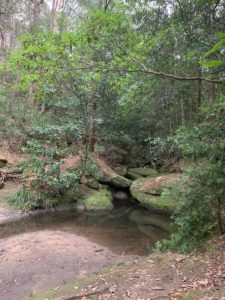
Waitara Creek

when the sun broke through 

after the storm 

the grass plants   ferns and  palms 

here in the understory of the  bush

lit up like fairy lights 

and the dappled shadows

swayed gently

bringing the path alive

a whole different world 

to the moody  grey-green

mystery of just before

all the time

there was work going on 

frogs acrocking in the wet

whip birds were chatting 

and a few other birds high in the canopy

were exchanging news

how interesting it would be to interpret

many lizards and water dragons 

out sunning themselves 

popped away with a rustle

as I stepped quietly along

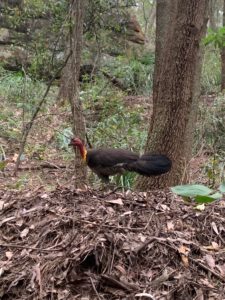
brusk turkeys  wander along


white butterflies flitted and feed

amongst the flowering weeds

bees were busy 

and the creek was gurgling

along in the background 

enjoying its fast bountiful flow

the track follows the Waitara Creek 

lined with second generation

 amazing patchy coachwood trees

then our of the valley

with its mystery and intrigue  

climbing out to the open woodlands 

where if you look up


you can see a crimson rosella

but also  the encroachment

of suburban sprawl  

high in the trees birds were  busy 

but the inevitable  had happened 

in the understory bush retreat

where i discovered the fairy wren before

the bush was gone

birds were silent

the inevitable planned  back-burn

necessary

for the fire risk

when the dry heat of summer sets in

has taken the bush retreat of the little birds

devastated i stand and ponder –

how can we find a way to be and let be?

Finding Zen: The opportunity of this time adapted by Colleen Keating

“We can create a fearless life
by living daily out of our comfort zone,
and in the deliciousness of uncertainty”

The Opportunity of This Time

The truth is, all of this has always been here. We’ve always been distracted, numbing our difficult emotions like loneliness and sadness and anger with social media, food, alcohol and other comforts. We’ve always felt uncertainty, anxiety, frustration and overwhelm.

It’s just that this pandemic has brought it all front and center. Put it directly in our faces, so we can’t ignore it.

That’s difficult, but it’s also an opportunity — to look directly at the things we don’t want to admit to ourselves.

To become present to our emotions.

To train ourselves in compassion, gratitude, wonder, connection, meaning and mindfulness.

It’s terrible that people are get sick and die,— we don’t want to pretend that everything is rainbows and unicorns. It’s terrible and easy to turn to alcohol are other unhealthy ways of coping with all of this.

But we need to make the most of this time, use the opportunity of this time.

We start first by recognizing whatever is there for us: overwhelm, distraction, loneliness, sadness, frustration, disconnect, anxiety.

We get present with it: how does it feel in our body? Can we be with the sensations of these emotions, mindfully, gently, with openness and curiosity?

We bring compassion to ourselves — a sense of warmth and wanting happiness for ourselves.

We then try a new frame of mind — here are a handful to try out:

  • Curiosity: can we be curious about something in this moment, from the sensations of our emotions to what another person is going through? What changes for you when you practice curiosity?
  • Wonder: Can we view this moment (ourselves, our surroundings, other people) with a sense of awe and appreciation? With a sense of wonder at the miracle of life? How does that change things for you?
  • Gratitude: Can we feel a sense of gratitude for what we have in this moment, for the other person, for our eyesight? What would it be like to lose those things? Can we see the things we have through this new lense of appreciation?
  • Meaning: What if everything we did had a sense of meaning — what if every act could be a way to love ourselves, or to love and serve others? How would that change each act for you?
  • Mindfulness: Can we simply be present in this moment? Connect with a sense of spaciousness and awareness of what is happening right now? What shifts for you when you do this?
  • Connection: Can we feel a sense of connection to others in each moment? To the light in ourselves? To the world around us? And realize how we’re supported by the entire world.
  • Empowerment: There’s a big difference between doing something because we feel we should, or because we have to … and doing something because we choose to. Can you choose into each act in your day? Or choose out of it, if you really don’t want to do it? What would life be like if you were choosing to do things from an empowered place, rather than feeling like life was happening to you?

Choose one at a time, and practice it for a few days. Life in the pandemic will give you plenty of practice opportunities, if you look for them. Embrace them, and train.

gratefully,

Leo Babauta
Zen Habits      Thanks to Zen Habits

“We can create a fearless life by living daily out of our comfort zone, and in the deliciousness of uncertainty”

Countdown to COP 26 Glasgow from Hildegards point of view by Colleen Keating

Hildegard speaks out today reminding us to care for our planet,
with her words,
her music,
her knowledge of healing plants,
her writings on the cosmos,
her understanding of the interdependence of all of creation,
her instruction of not demanding over yields from the earth
and how the earth is our mother.

Hildegard writes,
“The earth is at the same time mother, She is mother of all that is natural, mother of all that is human. She is mother of all, for contained in her are the seeds of all.”
~ Hildegard of Bingen

Her words are even more important in the 21st century, 842 years after her last breaths, Hildegard’s voice is crying out for humanity now .

This year is our watch . We are the witness.

Our silence is our complicity

The 19th century Danish philosopher and theologian , Søren Kierkegaard, offers an allegory for our dilemma now at this time of red code for our planet.


“A fire broke out backstage in a theatre. The clown came out to warn the public; they thought it was a joke and applauded. He repeated it; the acclaim was even greater. I think that’s just how the world will come to an end: to general applause from wits who believe it’s a joke.”


However today it is more traumatic for on that stage we have a chorus of pearl- dressed women and dark-suited men serious, educated, sometimes religious who sing from the side that is all a hoax lulling the audience even sabotaging anyone who gets up for action while behind the curtain their self serving pork barrelling hurriedly goes on. Also leaders who reassure anyone in lullabies of reassurance we the masses of humanity will be kept safe and they speak for us, make decisions for us. and we will be safe.

How we treat mother earth is a reliable measure of how we treat ourselves.

The way we treat our people mirrors the way we treat the earth

How we treat the vulnerable, women, the aged, indigenous peoples children, handicapped mirrors how we treat the earth.

Ask, how many women have died as a result of Domestic Violence this year?

Ask, how many Australian Indigenous people have died in custody this year?

Ask, how many children have been abused this year?        

This year is our watch . We are the witness.

Our silence is our complicity .

counting dead women

i rose towards dawn
to sit by the big picture window

the sky black as raven wings
lay still and silent
like a dark night of the soul

i was desperately seeking
some colour some hope
upon the dark edge of the world
where sea and sky meet

my mind kept scribbling
names of women dead women
words of violence can’t be erased

as the darkness of the first news
counting dead women
crowds my mind
blankets my heart
even as the breath of dawn
spreads its radiance

Colleen Keating 2014

Published in A Call to Listen by Colleen Keating

Lockdown walk No. 20 Waiting for godwits by Colleen Keating


w

Waiting for godwits

Today we had a picnic near the broad walk

overlooking a sanctuary for water birds

we have been waiting for godwits 

the bar-tail godwits

with their long curved beaks to arrive

special visitors from the Arctic for their breeding 

the furtherest distance of  migration 

we wiled away time observing water birds

sea gulls  shear waters  egrets  spoonbills  pelicans

plovers their five chicks

learning to forage in the sea grasses 

many species of ducks

their ducklings  tucked away

some grazing on the wrack and sea grasses

some gazing  about peacefully 

and we too gazed peacefully

suddenly the plovers were seriously distressed

birds honked, quacked, squawked as they filled the air 

and i looked out to see a dog

wildly flying across the shallows

chasing the fleeing birds 

disturbing the wrack and sea grass

with its food of crustaceans and other insects 

it chased after any bird that landed again 

galloped like a horse backwards and forwards 

a man watched on 

the still mirrored lake was  shattered 

the sanctuary was ripped apart

splashed up

churned like a miniature tsunami 

finally the man whistled

got on his bike and the big brown dog

 sloshed out of the lake followed him

I stared at him leaving . I was distressed.

i was shattered like the lake

 broken like a vase into a thousand pieces 

so powerless  close to tears 

my mind   my whole being 

needed to be picked up 

gently mended  

my tutor of course to restore calm

the lake 

and  the birds