Advice from a Tree by Colleen Keating


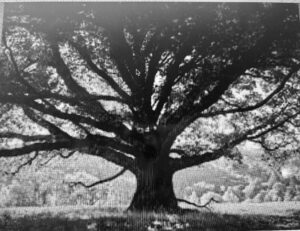
                                  ADVICE from a TREE


Stand tall and proud.


Go out on a limb


Remember your roots


Drink plenty of water


Be content with your natural beauty


Enjoy the view
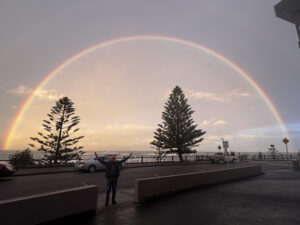


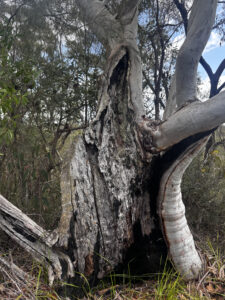
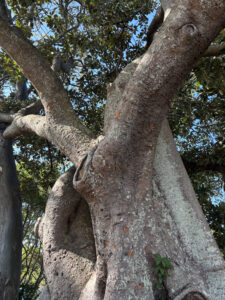
(Trees with their own characters)
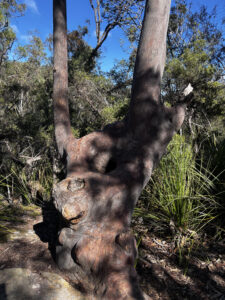
     

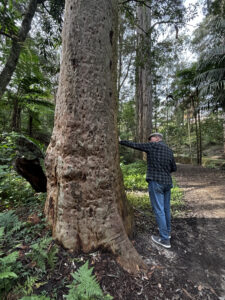
(Trees on our local walk)
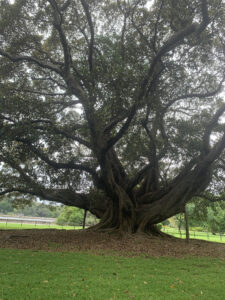
(A tree in grdens with a lot to say if you listen)

Some words from  poet and philospher, Herman Hesse

“For me, trees have always been the most penetrating preachers. 

I revere them when they live in tribes and families, in forests and groves. And even more I revere them when they stand alone. They are like lonely persons. Not like hermits who have stolen away out of some weakness, but like great, solitary men, like Beethoven and Nietzsche , like Hildegard of Bingen and Virginia Woofe

In their highest boughs the world rustles, their roots rest in infinity; but they do not lose themselves there, they struggle with all the force of their lives for one thing only: to fulfill themselves according to their own laws, to build up their own form, to represent themselves. 

Nothing is holier, nothing is more exemplary than a beautiful, strong tree. 

When a tree is cut down and reveals its naked death-wound to the sun, one can read its whole history in the luminous, inscribed disk of its trunk: in the rings of its years, its scars, all the struggle, all the suffering, all the sickness, all the happiness and prosperity stand truly written, the narrow years and the luxurious years, the attacks withstood, the storms endured.

Trees are sanctuaries. Whoever knows how to speak to them, whoever knows how to listen to them, can learn the truth. They do not preach learning and precepts, they preach, undeterred by particulars, the ancient law of life.

A tree says: A kernel is hidden in me, a spark, a thought, I am life from eternal life. The attempt and the risk that the eternal mother took with me is unique, unique the form and veins of my skin, unique the smallest play of leaves in my branches and the smallest scar on my bark. I was made to form and reveal the eternal in my smallest special detail.

A tree says: My strength is trust. I know nothing about my fathers, I know nothing about the thousand children that every year spring out of me. I live out the secret of my seed to the very end, and I care for nothing else. I trust that God is in me. I trust that my labor is holy. Out of this trust I live.

When we are stricken and cannot bear our lives any longer, then a tree has something to say to us: 

Be still! Be still! Look at me! Life is not easy, life is not difficult. Those are childish thoughts. Let God speak within you, and your thoughts will grow silent. You are anxious because your path leads away from mother and home. But every step and every day lead you back again to the mother. Home is neither here nor there. Home is within you, or home is nowhere at all.

A longing to wander tears my heart when I hear trees rustling in the wind at evening. If one listens to them silently for a long time, this longing reveals its kernel, its meaning. It is not so much a matter of escaping from one’s suffering, though it may seem to be so. It is a longing for home, for a memory of the mother, for new metaphors for life. It leads home. Every path leads homeward, every step is birth, every step is death, every grave is mother.

So the tree rustles in the evening, when we stand uneasy before our own childish thoughts: Trees have long thoughts, long-breathing and restful, just as they have longer lives than ours. They are wiser than we are, as long as we do not listen to them. But when we have learned how to listen to trees, then the brevity and the quickness and the childlike hastiness of our thoughts achieve an incomparable joy. Whoever has learned how to listen to trees no longer wants to be a tree. He wants to be nothing except what he is. That is home. That is happiness.”

Hermann Hesse
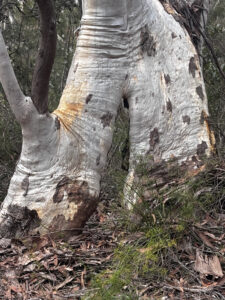
(BECOMING ONE. This tree fascinates me . It is early in the walk at Kur -rin-gai Wild Flowers Park)
 

Catchment – Poetry of Place Fifth Edition ed. Rodney Williams by Colleen Keating

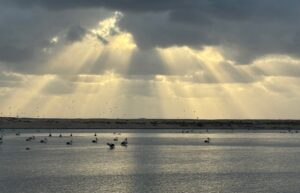
Sunrise over The Entrance  Central Coast

Thank you Rodney William, editor of a very interesting and packed on line journal . A valued  poetry of place collection .

I feel very privileged  to be chosen again as I was in June 2025 in Catchment  -Poetry of Place

Catchment  – Poetry of Place Fifth Edition. December 2025 to be published 21st december.

Dear Colleen,

Congratulations! We are delighted to accept the following writing of yours for the fifth issue of Catchment – Poetry of Place: 

as longer poetry –

At Matsuyama

Litchfield National Park

as tanka –

Changi

beach lookout

In the meantime, please do not circulate the text of any poetry accepted here on social media prior to our next release date.

A further email will follow, advising when Edition 5 has gone live online.

Copyright for poems published remains with their authors, yet Catchment should please be given credit in any subsequent re-publication.

With your support for this edition valued greatly, we look forward to receiving further poetry of place from you in future.

In the meantime, best of luck with all your writing!


Rodney Williams

Editor

Rodney Williams
Editor
Catchment – Poetry of Place
Baw Baw Arts Alliance
Gunaikurnai Country
West Gippsland, Victoria


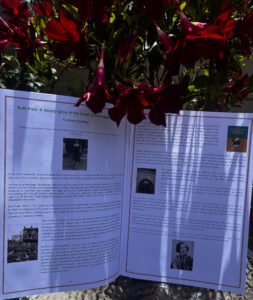
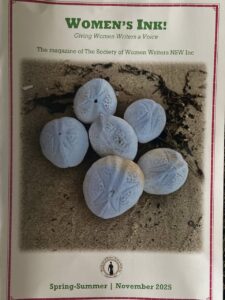
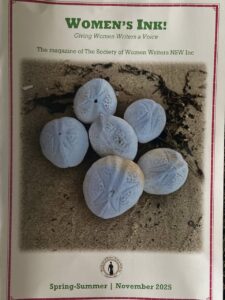
Women’s Ink SWW: Spring-Summer November 2025. Ruth Park: A steady glow of the heart of Australian literature by Colleen Keating


Very excited to have my first piece on  Australian Women Writers  published in  the latest edition of SWW Women’s Ink magazine  Spring- Summer November 2025.

Thankyou Janette Conway for such a richly packed and  enjoyable edition!  A final wonderful edition for our Centenary Year.  

My article  Ruth Park: A steady glow at the heart of Australian literature is the first in a series I am writing on Australian Women Writers and it was very apt to begin with the wonderful Ruth park  who we are proud to call one of our early members of the Society of Women Writers.

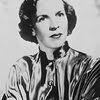
Ruth Park:   A steady glow at the heart of Australian literature 


“Writing is a passion I have never understood, yet a storyteller is all I have ever wanted to be. 

― Ruth Park

It is a truth universally acknowledged that a good read can change your life. For many of us reading in the 60’s and 70’s in Sydney, the young woman writer, Ruth Park. sparked a lasting literary love affair. 

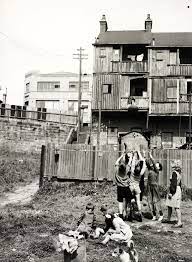
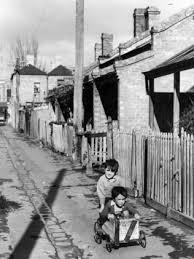
For me as a teenager, finding her debut novel The Harp in the South and later Poor Man’s Orange was my first encounter with poverty and destitute families. Through the eyes of the young Dolours I learnt of unwanted pregnancy, abortion, sex outside marriage, prostitution, child abuse, topics that were taboo at the time. I was seeing life through Dolours dreamy eyes.  A bright girl, aspiring to get a good education and escape, ‘get out of the hills’ that being the suburb of Surry Hills which was an inner-west slum, resulting from the depression and wars.

Ruth Park,  born in 1917, grew up with a pen in her hand, from when a young girl in Auckland New Zealand. In 1942 she migrated to Australia to marry Australian writer D’Arcy Niland,  (The Shiralee) her long-term trans-Tasman journalistic correspondent, and together they embarked on mutually supportive and successful careers as freelance writers.


Historically The Harp in the South won the first Herald Writing Competition and a condition of this award was to be published in instalments in the Sydney Morning Herald.  After reading the synopsis many people wrote to the paper to have it banned due to its candour. The paper was swamped with angry letters calling it a cruel fantasy because as far as they were concerned, there were no slums in Sydney! However the newly married Park and Niland did live for a time in Surry Hills and vouched for the novel’s accuracy.  

Further it was published in book form in 1948 by Angus & Robertson, who baulked at the novel but had to honour a ‘gentleman’s agreement to publish the winner’.It has gone on to become a classic and never out of print.  Park ’s portrayal of an Irish-Australian family living with poverty, ill health, alcoholism was scarifying. We experience the prejudice of religions,  life of the Irish, the Chinese green grocer,  and early European migrants who had come expecting  to find ‘the road cobbled with gold’  only to find it, ‘made of stone harder than an overseer’s heart’.   But always Park shows us the warmth and heart wrenching tolerance of each other. 


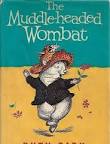
Next for me rearing my own children with the long time radio serial (3,129 episodes) of a wombat who’s brains “rattled beautifully.” and who said his bike bit him when he hurt himself falling off,  is also thanks to this prolific woman writer.  And how wonderful when with illustrator Noela Young , the characters were brought to life on paper and over a dozen books of the Muddle-Headed Wombat were born.  Like many parents of the  60’s and 70’s I have fond memories of these irresistible characters including with Wombat, a good natured female mouse called Mouse and a vain neurotic cat called Tabby.

Today, however what stands out for many young readers is her children novels Playing Beatie Bow,  set in what is now called the Rocks Area. A story of children playing a scary game and the young protagonist getting caught into the slip of time, finding her self back in the Rocks of 1870 . Here the young girl Abigail meets a family, is tripped up to stay and falls in love.  Abigail, professed to have “the gift” from an old crocheted  collar on her dress, returns to find the parallel world of friendship and love in reality.   

This novel is often on the Primary syllabus and so many children have experienced the Playing Beatie Bow excursion – where they discover the Rocks. Stairs and alleyways and old stone houses are  still there, although today renovated and prime real estate. 

Ruth Park stands as one of the major twentieth-century Australian writers, with a body of work that spans popular, professional, and literary realms. Her writing has opened social  windows onto aspects of early Australian life that were not spoken  about in her time. 

The reception of Park’s work has been shaped by the high/low cultural divide, further reinforced by prejudices that dismissed female writers as sentimental or popular, rather than serious literary figures. Park fixes her sharp, sympathetic eye on those areas of life that male writers tended to treat downplay or disregard: abortion, the exhausting care of children, the difficulties of long marriage, childbirth, and the pleasures of (married) sex. 

Park’s focus on the lives of the most marginalised groups, including working-class men and women, Indigenous peoples and immigrants, shows her as a woman before her time  who spoke truth and didn’t allow custom to get in her way.  Her lasting impact I believe, is due to the enduring quality of her storytelling and the power of her imaginative vision – her own unique ‘window of life’.

Ruth Cracknell exclaimed her to be  “A steady glow at the heart of Australian literature”  and  in this Centenary Year we are proud to call Ruth Park an early member of our Society of Women Writers.


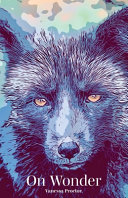
Vanessa Proctor: On Wonder review by Colleen Keating

I feel very proud to have two reviews  in the latest edition of  SWW Women’s Ink Magazine,  Spring- Summer November 2025.

Thank you Janette Conway for your very professional edition of our Women’s Ink.

Jan does it all joyfully and with comfort and ease.  It shows that  it is a labour of love
but it still is very demanding on time and energy and I appreciate this.

 A final wonderful edition for our Centenary Year.  

___________________________________________________

   On Wonder 

   Vanessa Proctor

    reviewed by Colleen Keating

This striking new book is filled with wonder, a delight to read either from cover to cover
or to dip into poem by poem. Full of original images it begins with family, unfolds from autobiographical
to the rich cacophony of visual arts, music, architecture, many as ekphrastic poems
and others using the powerful technique of taking on the persona such as a medieval gargoyle
in the poem Le Stryge .

I believe awe and wonder can sustain us; how taking time for awareness of the beauty
around us helps us and especially our children to grow in spirit.
At this time of increasing conflict and fraught demands on our attention, how uplifting it is to read
this collection of contemplative poetry.

On Wonder, a first collection of free verse from Vanessa Proctor, was published by Walleah Press
in late December 2024.
Vanessa is an award–winning Sydney poet and is highly acclaimed as a haikuist with three haiku
publications and co-editor of  under the same moon, Fourth Australian Haiku Anthology .

Vanessa Proctor’s poetry “encompasses an intimacy of living with minutely observed details of nature and time”.
These affirming words by Marcelle Freiman, on the back cover,  come from an appreciation of the rich use of imagery
and memory where time is all present.

Each poem is a bead of beauty, of lightness, of memory as in the wistful Cicada shells, their song,

thick with promise
of long afternoons
and lingering summers/which inevitability end
far too soon.

Vanessa writes gently of tragedy, a friend dying, a shipwreck, the desperation in Budapest 1944
where the pen is power. 

Memory as a way of living with the present and the telling of stories is succinctly expressed in Vanessa’s early poems;
sharing a bowl of steaming pho with her son, times with her father as a young girl , with her mother in Weberg 1980
and its hint of unease, with her sister

in a carefree summer spilling over
with sunshine and salt spray;

with her daughter,a poem any of us who have had a teenaged daughter will identify with.

One of my favourites is the poignant poem, Emergence about a new baby in the special care nursery,

Soon I’ll take you home
hold you,
get to know you,
from the outside in. 

Vanessa writes of an experience in an English cathedral, with the singing of a Hildegard of Bingen song,
O Quam Mirabilis Est 
(How Wondrous it is) we are touched with an abundance of spirit, carried across nine centuries
in praise of the beauty of creation,

the transformation of breath
into the energy of sound,
one expansive voice rising up,
visionary and numinous.

We were privileged to hear Vanessa talk about her new book at our SWW August meeting
and I hope this review encourages you to enjoy On Wonder. As in her poem Dragonfly,
may your reading her poetry,

“become a stillness
that dissolves into the morning


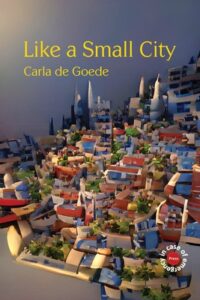
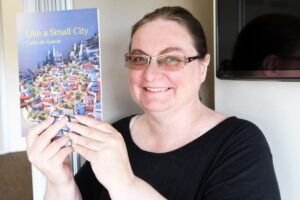
Carla de Goede, Like a Small City . Book review by Colleen Keating

I feel very proud to have two reviews  in the latest edition of  SWW Women’s Ink Magazine,  Spring- Summer November 2025.
The first one is a review of Vanessa Proctor’s exquisite book ON WONDER.
This is the second one Like  a Small City  by Carla de Goede
Thank you Janette Conway for your very professional edition of our Women’s Ink.

Jan does it all joyfully and with comfort and ease.  It shows that  it is a labour of love
but it still is very demanding on time and energy and I appreciate this. 

 As Jan says in her editorial it has been an amazing year of celebration for the Society of Women Writers.
A centenary is no small feat for an organisation that has never faltered through all the challenges
it has been up against over 100 years  and as members and friends it has been our opportunity
to support and enjoy each other writing over the time of our membership. 

My first review was of the equiste poety collection On Wonder by the award winning haikuist  Vanessa Proctor .

BOOK REVIEW 

 Like a Small City

 Carla de Goede

Reviewed by Colleen Keating 

In a poem called, What poetry does, Carla de Goede writes: It hits you like /a wall / whacks a punch /

and haunts you. This amazing collection of poetry does just that. In reading Like a Small City, I was plunged headlong into a dark and and painful place.

The back blurb states,‘Carla’s poems are written as a celebration of survival, even the harrowing, startling, shocking poems’  Though it was hard reading it was spell-binding.

Powerful use of words, imagery and the breathing space the poet leaves for us to feel, increases an unsettling vibe. ‘He was always punching her / face /  though it happened  / only once.’  Sometimes  we are slowly relieved with a touch of nature,‘as even slugs squish out their messages / in silvery stains / their letters like spiderweb / tinsel.’  

Carla’s use of metaphor, its play, its power takes meaning beyond meaning. The sun picks at her guitar / 

and the frets grin like a mouth full of gold teeth, magma memories / bubbling out / like red jam.  and the extra associated meaning in,  Then I hear something / fantastic /and pop my head / back / in the oven of mediocrity.  

In Wake, she begins, She held the arm with the bruise / like a walkie talkie up to her lips’ 

The reader will appreciate the honesty of the surreal in Carla’s writing making it strangely freeing as sometimes marked by the intense irrational realityof a dream. There is a poignant justice slant in the experimental poem, Journey out the back door, the deep understanding of the homeless with its redemptive hint in Morning Under a Bridge, and recognise the poet’s empathy for one close to death from work radiation poisoning, with the hopeless struggle to get compensation for the children in the poem, In the Armchair. 

Like a Small City, Carla de Goede’s second poetry collection is a highly recommended read.  It was short-listed for the coveted 2022 Dorothy Hewett Award.Many of the poems in the collection have won awards and are included in anthologies.


In an age where “reality” is often questioned and obscured, poetry is especially powerful in its ability to capture the surreality of the present moment. This poetry collection is a valued addition to the genre of Australian women’s poetry. 


I will end with a favourite poem of mine, The Lake, where light shines out of  the dark.  Suddenly happiness took me / like a man with strong arms. and she continues, ’as the sun dips into the water / like a flamingo.’   

Buy a copy and experience this heart-rending journey. 

 Photo: STEWART CHAMBERS


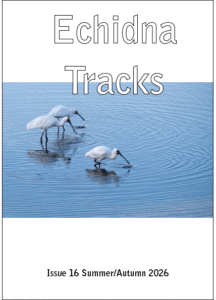
Echidna Tracks Issue 16 Summer/Autumn 2026 by Colleen Keating

I am very proud to be included in the latest Echidna Tracks   and honoured to be included with these amazing poets and lovers of haiku

Edition  Issue 16,Summer/Autumn 2026

Editor  Lynette Arden on November 24, 2025

grandpa’s plum tree
in its shade his grandson
savours the sweetness

Vanessa Proctor

soft drumbeats
as the service ends
a boy’s glance upward

Jo McInerney

reading the ode—
a rising sun glitters
on his slouch hat

Colleen Keating

luminous skies . . .
the wilting wildflowers
on a soldier’s grave

Samantha Sirimanne Hyde

“Australia, in the twenty-first century, is a vibrant multicultural society.

We hope to celebrate, through the haiku/senryu collected on this website,

the diversity of lifestyles, values, characters, customs, cultures,

and historical experiences of the people inhabiting Australia,

as well as the diversity of our landscapes, flora, and fauna.”