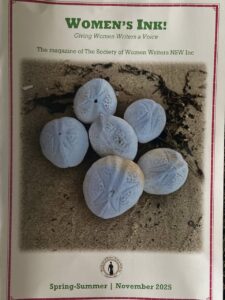
Women’s Ink SWW: Spring-Summer November 2025. Ruth Park: A steady glow of the heart of Australian literature by Colleen Keating


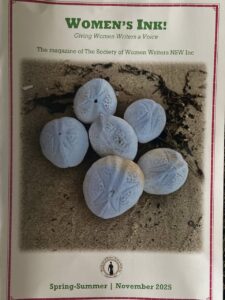
Very excited to have my first piece on  Australian Women Writers  published in  the latest edition of SWW Women’s Ink magazine  Spring- Summer November 2025.

Thankyou Janette Conway for such a richly packed and  enjoyable edition!  A final wonderful edition for our Centenary Year.  

My article  Ruth Park: A steady glow at the heart of Australian literature is the first in a series I am writing on Australian Women Writers and it was very apt to begin with the wonderful Ruth park  who we are proud to call one of our early members of the Society of Women Writers.
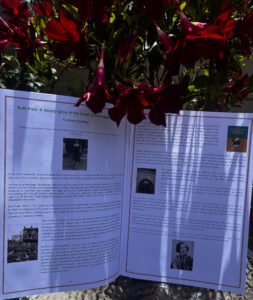
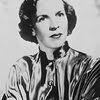
Ruth Park:   A steady glow at the heart of Australian literature 


“Writing is a passion I have never understood, yet a storyteller is all I have ever wanted to be. 

― Ruth Park

It is a truth universally acknowledged that a good read can change your life. For many of us reading in the 60’s and 70’s in Sydney, the young woman writer, Ruth Park. sparked a lasting literary love affair. 

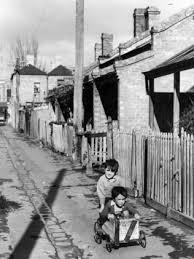
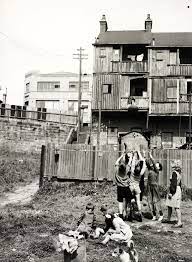
For me as a teenager, finding her debut novel The Harp in the South and later Poor Man’s Orange was my first encounter with poverty and destitute families. Through the eyes of the young Dolours I learnt of unwanted pregnancy, abortion, sex outside marriage, prostitution, child abuse, topics that were taboo at the time. I was seeing life through Dolours dreamy eyes.  A bright girl, aspiring to get a good education and escape, ‘get out of the hills’ that being the suburb of Surry Hills which was an inner-west slum, resulting from the depression and wars.

Ruth Park,  born in 1917, grew up with a pen in her hand, from when a young girl in Auckland New Zealand. In 1942 she migrated to Australia to marry Australian writer D’Arcy Niland,  (The Shiralee) her long-term trans-Tasman journalistic correspondent, and together they embarked on mutually supportive and successful careers as freelance writers.


Historically The Harp in the South won the first Herald Writing Competition and a condition of this award was to be published in instalments in the Sydney Morning Herald.  After reading the synopsis many people wrote to the paper to have it banned due to its candour. The paper was swamped with angry letters calling it a cruel fantasy because as far as they were concerned, there were no slums in Sydney! However the newly married Park and Niland did live for a time in Surry Hills and vouched for the novel’s accuracy.  

Further it was published in book form in 1948 by Angus & Robertson, who baulked at the novel but had to honour a ‘gentleman’s agreement to publish the winner’.It has gone on to become a classic and never out of print.  Park ’s portrayal of an Irish-Australian family living with poverty, ill health, alcoholism was scarifying. We experience the prejudice of religions,  life of the Irish, the Chinese green grocer,  and early European migrants who had come expecting  to find ‘the road cobbled with gold’  only to find it, ‘made of stone harder than an overseer’s heart’.   But always Park shows us the warmth and heart wrenching tolerance of each other. 
     

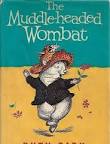
Next for me rearing my own children with the long time radio serial (3,129 episodes) of a wombat who’s brains “rattled beautifully.” and who said his bike bit him when he hurt himself falling off,  is also thanks to this prolific woman writer.  And how wonderful when with illustrator Noela Young , the characters were brought to life on paper and over a dozen books of the Muddle-Headed Wombat were born.  Like many parents of the  60’s and 70’s I have fond memories of these irresistible characters including with Wombat, a good natured female mouse called Mouse and a vain neurotic cat called Tabby.
Today, however what stands out for many young readers is her children novels Playing Beatie Bow,  set in what is now called the Rocks Area. A story of children playing a scary game and the young protagonist getting caught into the slip of time, finding her self back in the Rocks of 1870 . Here the young girl Abigail meets a family, is tripped up to stay and falls in love.  Abigail, professed to have “the gift” from an old crocheted  collar on her dress, returns to find the parallel world of friendship and love in reality.   

This novel is often on the Primary syllabus and so many children have experienced the Playing Beatie Bow excursion – where they discover the Rocks. Stairs and alleyways and old stone houses are  still there, although today renovated and prime real estate. 

Ruth Park stands as one of the major twentieth-century Australian writers, with a body of work that spans popular, professional, and literary realms. Her writing has opened social  windows onto aspects of early Australian life that were not spoken  about in her time. 

The reception of Park’s work has been shaped by the high/low cultural divide, further reinforced by prejudices that dismissed female writers as sentimental or popular, rather than serious literary figures. Park fixes her sharp, sympathetic eye on those areas of life that male writers tended to treat downplay or disregard: abortion, the exhausting care of children, the difficulties of long marriage, childbirth, and the pleasures of (married) sex. 

Park’s focus on the lives of the most marginalised groups, including working-class men and women, Indigenous peoples and immigrants, shows her as a woman before her time  who spoke truth and didn’t allow custom to get in her way.  Her lasting impact I believe, is due to the enduring quality of her storytelling and the power of her imaginative vision – her own unique ‘window of life’.

Ruth Cracknell exclaimed her to be  “A steady glow at the heart of Australian literature”  and  in this Centenary Year we are proud to call Ruth Park an early member of our Society of Women Writers.
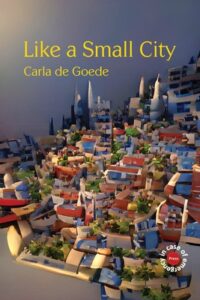
 

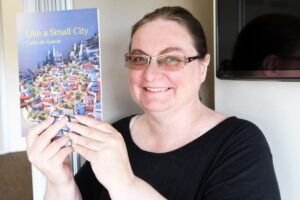
Carla de Goede, Like a Small City . Book review by Colleen Keating

I feel very proud to have two reviews  in the latest edition of  SWW Women’s Ink Magazine,  Spring- Summer November 2025.
The first one is a review of Vanessa Proctor’s exquisite book ON WONDER.
This is the second one Like  a Small City  by Carla de Goede
Thank you Janette Conway for your very professional edition of our Women’s Ink.

Jan does it all joyfully and with comfort and ease.  It shows that  it is a labour of love
but it still is very demanding on time and energy and I appreciate this. 

 As Jan says in her editorial it has been an amazing year of celebration for the Society of Women Writers.
A centenary is no small feat for an organisation that has never faltered through all the challenges
it has been up against over 100 years  and as members and friends it has been our opportunity
to support and enjoy each other writing over the time of our membership. 

My first review was of the equiste poety collection On Wonder by the award winning haikuist  Vanessa Proctor .

BOOK REVIEW 

 Like a Small City

 Carla de Goede

Reviewed by Colleen Keating 

In a poem called, What poetry does, Carla de Goede writes: It hits you like /a wall / whacks a punch /

and haunts you. This amazing collection of poetry does just that. In reading Like a Small City, I was plunged headlong into a dark and and painful place.

The back blurb states,‘Carla’s poems are written as a celebration of survival, even the harrowing, startling, shocking poems’  Though it was hard reading it was spell-binding.

Powerful use of words, imagery and the breathing space the poet leaves for us to feel, increases an unsettling vibe. ‘He was always punching her / face /  though it happened  / only once.’  Sometimes  we are slowly relieved with a touch of nature,‘as even slugs squish out their messages / in silvery stains / their letters like spiderweb / tinsel.’  

Carla’s use of metaphor, its play, its power takes meaning beyond meaning. The sun picks at her guitar / 

and the frets grin like a mouth full of gold teeth, magma memories / bubbling out / like red jam.  and the extra associated meaning in,  Then I hear something / fantastic /and pop my head / back / in the oven of mediocrity.  

In Wake, she begins, She held the arm with the bruise / like a walkie talkie up to her lips’ 

The reader will appreciate the honesty of the surreal in Carla’s writing making it strangely freeing as sometimes marked by the intense irrational realityof a dream. There is a poignant justice slant in the experimental poem, Journey out the back door, the deep understanding of the homeless with its redemptive hint in Morning Under a Bridge, and recognise the poet’s empathy for one close to death from work radiation poisoning, with the hopeless struggle to get compensation for the children in the poem, In the Armchair. 

Like a Small City, Carla de Goede’s second poetry collection is a highly recommended read.  It was short-listed for the coveted 2022 Dorothy Hewett Award.Many of the poems in the collection have won awards and are included in anthologies.


In an age where “reality” is often questioned and obscured, poetry is especially powerful in its ability to capture the surreality of the present moment. This poetry collection is a valued addition to the genre of Australian women’s poetry. 


I will end with a favourite poem of mine, The Lake, where light shines out of  the dark.  Suddenly happiness took me / like a man with strong arms. and she continues, ’as the sun dips into the water / like a flamingo.’   

Buy a copy and experience this heart-rending journey. 

 Photo: STEWART CHAMBERS


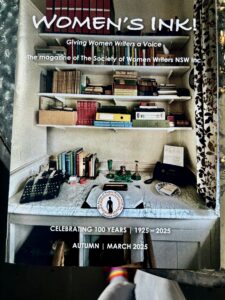
Women’s Ink Journal March 2025 editor Jan Conwey

Women’s Ink

Giving Women Writers a Voice

The Magazine of The Society of Women Writers NSW Inc. 

Celebrating 100 years 1925 –2025

Autumn/ March

Firstly thank you to our new editor Jan Conway for this edition Of Women’s Ink .  This is our year of celebration  for our centenary,  which was launched on Wednesday 12th March in the Dixon Room in the State Library and afterwards at 4pm in the afternoon as members and guests we gathered  at the State Library NSW Rooftop Bar where with a drink and nibbles in hand , we enjoyed good company , good talk and the unique stunning sunset view across the Sydney skyline and Harbour.

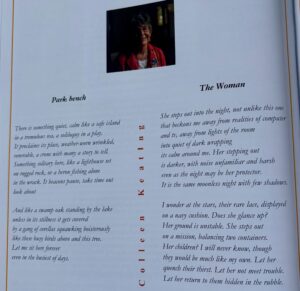
I am honoured to have two of my new poems published in The Women’s Ink

Here is an update of my published poem  called Park Bench

Park bench

Solid – something apart 
a grassy island in a tremulous sea, 
a soliloquy in a play. 

Something solitary here
a lighthouse set on rugged rock
or a heron solo in the wrack. 

It proclaims its place
weather-worn
wrinkled, venerable, 

a crone with many a story to tell.
  It tempts pause, take time out, 
look about.

How many have rested here
listened to the brush of grasses
found a full-stop moment  

amidst the shifting light?

Colleen

The Woman

She steps out into the night, not unlike this one 
that beckons me away from realities of computer
and tv, away from lights of the room
into quiet of dark wrapping
its calm around me. Her stepping out
is darker, with noise unfamiliar and harsh 
even as the night may be her protector.
It is the same moonless night with few shadows.

I wonder at the stars, their rare lace, displayed
on a navy cushion. Does she glance up? 
Her ground is unstable. She steps out 
on a mission, balancing two containers.
Her children? I will never know, though 
they would be much like my own. Let her 
quench their thirst. Let her not meet trouble.
Let her return to them hidden in the rubble.

Colleen Keating


Di Yerbury Residency Award 2024 by Colleen Keating


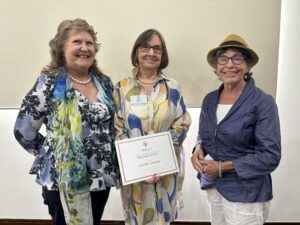
Jan Conway the worthy winner with the two judges Colleen Keating  & Sharon Rundle

Congratulations to Janette Conway, worthy winner of this year’s Di Yerbury Residency Award. 

Emerita Professor Di Yerbury, Patron of the Society of Women Writers NSW, generously sponsors the Writers Residency which grants the winner 3 months stay in Barnstaple, Devon, UK to research and to continue to write a full length work-in-progress.

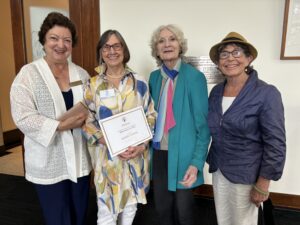
Maria McDougall (President of the SWW, Jan Conway the 2024 winner of the Di Yerbury Award,
Emerita Professor Di Yerbury and Colleen Keating one of the judges.

Previous winners of this award Belinda Murrell and Cindy Broadbent spoke about their time at the residency, the benefits that they enjoyed from their stay there, what it meant to them, as well as giving a brief insight into the work-in-progress that they are writing. Each showed a video to illustrate their talk. 

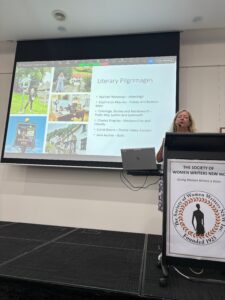
Pamela Rushby was guest speaker and spoke about her book about mudlarking on the Thames in London and showed us some of the artefacts she had retrieved from the banks of the river.

I highly recommend entering the Di Yerbury annual Residency Award, but you do need to be a member of the SWW. More at:

https://womenwritersnsw.org/di-yerbury-residency/

Congratulations to all our residency winners past and present.


DI YERBURY RESIDENCY 2024

Congratulations to Janette Conway on being awarded the 2024 Di Yerbury residency. Jan is seen here with Patron, Emerita Professor, Di Yerbury and judges Colleen Keating and Sharon Rundle

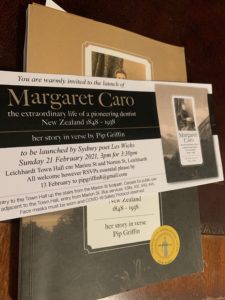
Les Wicks launches Margaret Caro by Pip Griffin


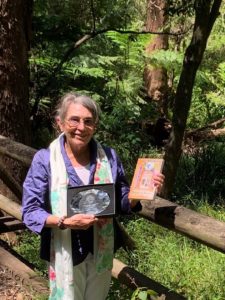
A very congenial  and rewarding afternoon was spent to launch Pip’s new book and celebrate  the  completion of the  journey of  writing this amazingly researched and interesting woman.

The renowned and award winning poet Les Wicks  had the amazing group of people listening to his words on writing and poetry and Pip’ s new book

Margaret Caro
the extraordinary life of a pioneering dentist
New Zealand 1848 – 1938
her story in verse

The group filled the very gracious historical  Leichhardt Town Hall and it was a  buzz of  chatter and catching up with writers, poets and friends.  I was excited to be part of the day as I felt I had supported Pip in the final birthing of the book with edits and encouragement  as she suports me with my writings.


A team effort Pip and her son John who created the cover and flyers for the launch . Such a gift and so beautifully done.


The president of the NSW Societry of Women Writers
Jan Conway joined us for the celebration.

Hildegard of Bingen: A poetic journey by Colleen Keating wins two prestigious awards


Hildegard of Bingen: A poetic journey has won two awards at the Society of Women Writers NSW Biennial  Book Awards at The State Library NSW on Wednesday 10th February 2020.

SWW Poetry Book Award 2020
SWW Non-fiction Book Award  2020

In the acceptance speech  Colleen Keating said:

This is for Hildegard. This is for women.  This is for those who have been silent, lost,  or suppressed down the ages  of 2000 years and more, of women who are being rediscovered to bring a balance back into the voice of history.

This is for our environment and our earth. Hildegard called  earth our Mother and reminds us to care for her as we would our mother. Our air, our rivers our soil,  our forests must be nurtured for they nourish us as a mother does.

This is for our well being. Hildegard reminds us that  nature and music are natural spirit given healers.  Hildegard has returned 900 years aftern her death and it is no accident she is speaking to people  in this 21st century at this time all over the world. We need her wisdom more than ever.

Thank to all for this awards. Thanks to the shortlisted poets and especially Pip as runner-up.  Jan Conway, President of the SWW  and the committee.

Special thanks to Stephen Matthews AOM and Ginninderra Press for affirming my work and beliveing in Hildegard and publishing my verse novel.it

My friend and supporter,  acclaimed poet, Pip Griffin renowned for her verse novel  –  the journey of a Chinese Buddhist nun ani lin,  was runner-up and highly commended  for the SWW Poetry Book Award for her evocative  poetic journey:

                    Margaret Caro
the extraordinary life of a pioneering dentist
        New Zealand 1848-1938

as the judge, highly acclaimed poet Margaret Bradstock wrote,

“Both Hildegard of Bingen and Margaret Caro are sustained narrative collections of poems celebrating the lives of strong, single-minded and deeply religious heroines, one an anchorite, visionary and ultimately abbess during the Middle Ages, the other a New Zealand dentist at the turn of the nineteenth century.
Through judicious poetic description the writers Colleen Keating and Pip Griffith respectively, are able to enliven their stories and engage the interest of the reader. Over several hundred pages of verse, this is no mean feat.  Griffin records her protagonist’s account in first-person stanzas, as a kind of poetic ventriloquy, allowing us entry to her thoughts and feelings, italicised conversation and quotations counterpointing this perspective. By contrast, Keating as poet tells Hildegard’s story, but interpolates the anchorites’s spoken words and unspoken musings in italics.”

Congratulations Pip .


Colleen Keating is Winner of two SWW Book Awards

Colleen Keating is Winner of two SWW  Book Awards

Colleen Keating is the winner of two awards. Her recently published Hildegard of Bingen: A poetic journey, has taken out two awards at The Society of Women Writers NSW Biennial Book Awards. This was held at the State Library of NSW on Wednesday 10th February 2021.

SWW Poetry Book Award  2020
SWW Non-fiction Book Award

The judge for the Poetry section, highly acclaimed poet  Margaret Bradstock  wrote:

‘Keating plays with language, uses nouns as verbs, creative imagistic parallels to enhance emotional states. Poetic descriptions such as ,

‘The Rhineland moon/ edges the icy road or dawn-crackle of ice . . .erratic shivers of the horses/with huff of dragon smoke ‘ ,

to quote just a couple, vividly evoke the scenarios the poet wishes us to experience. . . it was Keating’ employment of figurative language, of subtle metaphor that determined Hildegard of Bingen to be the winning title. ‘

The judge for the non-fiction section,  renowned writer and editor for reviews at Women’s Ink, Judith O’Connor wrote:

How wonderful and fitting that Colleen has chosen the poetic form. Her narrative and style never miss a beat – almost racy at times, bounding along with passion and action against a backdrop of the beauty of nature as seen through Hildegard’s eyes. Lines like,

‘Her body knows what she wants
… as honey birds know
the most succulent flower
and geese
instinctively migrate (p.51)

The book speaks with the voice of a writer truely inspired, immersed, seeped in the knowledge and spiritual understanding of this far-away woman who lived to a remarkable 82 years of age. Colleen takes us on the outer, physical journey of Hildegard’s life but also the rich and spiritual inner journey. Harsh at times but always compelling.”


Thank to all for this awards. Thanks to the shortlisted poets and especially Pip as runner-up.  Jan Conway, President of the SWW  and the committee.

Special thanks to Stephen Matthews AOM and Ginninderra Press for affirming my work and beliveing in Hildegard and publishing my verse novel.it