dispossession 3
out of sight
dry dusty shanty town
make-shift poverty
clammers on the fringe of our resort
south of lima in peru
the solid stone wall
divides us
out of sigh
but not out of mind

dispossession 3
out of sight
dry dusty shanty town
make-shift poverty
clammers on the fringe of our resort
south of lima in peru
the solid stone wall
divides us
out of sigh
but not out of mind
powerless
today a dusty sun slants sepia light
an eerie still scene of a shanty town
on the outskirts of Lima in Peru
monotone brown
ruins rubble rubbish scant vegetation
brown dusty brown
the dispossessed
in makeshift shelters
never ending palette of desolation
here on the outskirts of Lima
like a barnacled mass they cling
one night ten years ago
in india
i lay in your arms weeping for the poor
having seen the sorrow in a mother’s eyes
felt the touch of a begging hand
and i asked why
here they do not look
they turn away
a water truck comes
to refill drums
for those who can afford water
earlier it had freely watered green grass
of our resort with its luxury pool
when i walk away
i do not weep
answers would choke with dust
i don’t even know the questions
just crave your arms around me
against this inequality

black marble horsemen
with helmets medals and guns
celebrating the history of conquests
dominate santiago’s plaza des armas
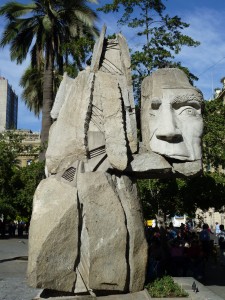
yet i’m drawn by an abstract monument
catching morning light
history’s cry is its caption
without our land there is no life
its massive basalt boulders
circle like a gossip of standing stones
and mounted high
on a roughly hewn second tier
chiselled cracked and cut
as if lightening spilt the rocks
a shadowed noble face
bigger than life
its carved wistful eyes
look beyond the plaza people pigeons
to the mountain
once home of the mapuche people
around its base children play
lovers cuddle adults chatter
while first people still with indomitable spirit
bear memories of dispossession

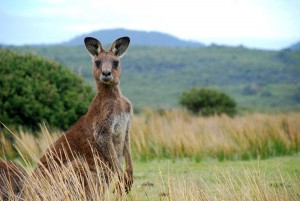
chance encounter
my rustling disturbed his place
how long he watched
i do not know
but hopped off to a safer place
then stopped
turned
looked again
our eyes met
both stood still
two of us alone
in the bush
yearning to bridge the gap
i reached out my hand
a divide
like two pots of gold
without a rainbow
held us apart
for a moment
I breathed his fear
our eyes were held
alert . . . focused
a glint of knowing
crossed the stare
this proud grey
the hunted
knowing his place
turned
and bound away
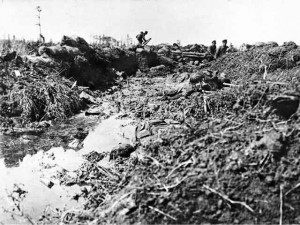
A battle in WW1 19th July 1916.
In 2009 – mass graves began to be exhumed, remains being identified and laid to rest with honour: it brings to the fore once again a story of the worst 24 hours in Australian history, july 19th 1916.
5,533 Australian casualties in one night and with no ground taken.

fromelles 2009
time
exposes
bones
in no mans land !
stories shout
from mass graves

hell-trap stories
gallant stories
fear-filled stories
failure crawls
through fire
mud barbed wire
piteous writhing mates
drainage ditches
no respite
blinkers of youth
lure of adventure
crippled
nightmared
an emotional cry
will you not fight for land your fathers died for !
and wars roll on
deafened with enterprise
now i ask how can cycles have an end
Colleen Keating from A Call to Listen
Twice a year for just over a decade I had the privilege and exciting opportunity of working for a week at a time in Japan. I was invited by the School of Aromatherapy in Tokyo to give the Reflexology section of the Aromotherapy Diploma.
On one of my trips after the 30 hour course given over 5 days, I caught the Shinkansen, the High Speed Bullet train, to Hiroshima. I enjoyed three wonderful days and relived the sad story I read many times called Sadako and a Thousand Paper Cranes by Eleanor Coerr.
It was the time of the 65th anniversary. I headed to the Peace Park where I went each day and was there early morning on the 6th August 2010.
The photo shows Hiroshima Peace Park completed in 1954. The park contains 66 statues, monuments and buildings that stand as a symbol of the nuclear abolition and the vow of humanity to pursue peace.
!
!
hiroshima sixty-five years on
sings a song of hope
cicadas have the upper note
the coo of doves
like tenors ground the sound
cooling water trickles
and children play
incense wafts from beds of sand
people bow as they pass
coloured cranes like prayer flags
hang on trees
and memorials
today is warm balmy
i sit by the river near the epicentre
it is 8.15 am
bells
ring out across the peace park
and around the city
Colleen Keating A Call to Listen 2014 Ginninderra Press.
Ringtail possums are part of our night life. They depend on the trees to get to their food source. After some beautiful old Bluegums were destroyed, cut down by a horrible noisy roar of chainsaws, and an even noisier greedy mulcher, that made the gracious bluegums into woodchip, the possum in my poem had to use the electric lines to travel and the risk is so much higher. You can see I am very angry about the cutting down of the suburban trees and i love our Australian Ringtails and am afraid we are loosing our animals from the cities. On my walk one morning I found the Ringtail Possum lying electrocuted at the foot of the telegraphic pole lying “like a sacrificial lamb to progress.”
g
going going
the chainsaws stop
with night
possums scurry across the fence
over the ivy into the last blue gum
tiger eyes
in the dark glow
white furry tails
curl flashes of light
they scramble
onto swaying melaleuca to feed
before they are off
for their night journey
on my morning walk
at the foot of a telegraph pole
a young ringtail possum lies
in sacrificial pose
electrocuted
in stiff smelling air
standing alone on the street
i look at the bare spaces in the sky
and rage
against the taking of our treescape
Colleen Keating A Call to Listen 2014 Ginninderra Press
!
This poem is part of my beach walking experience
how to love a rock
its a hard thing to love a rock
you need to receive it as gift spend time
commune
gaze
touch and stroke
its smoothness
and grooves
flaws and imperfections
hold and ponder
imbue the magic of its radiating warmth !
wait upon it
allow it to seize your senses
listen for its whisper
consider where it belongs
maybe to spin joyfully back out to sea maybe a memory of a beach walk
or friendship
to adorn your book shelf or garden
or a bonsai pot
for a miniature fig to claim as its own
if it doesn’t inspire
let it go

In 1998 when I began the double Diploma course on Healing at Nature Care the Health College at St Leonards in Sydney, Reflexology was one of the courses.It is a system of massage and reflex used to relieve tension and treat illness, based on the theory that there are reflex points on the feet, hands and head (ear) which links to every part of the body
It is based on the theory that energy is moving through our body and it can become blocked and this is where health problems can begin. By working the spot that is pinpointed can assistin moving the energy or chi again. We all know what happens to a pond that becomes stagnant . . .imagine digging a channel to allow a flow again. Well Reflexology works mainly on the feet to do this.
One of the experiences was to visit a Nursing Home near by where Reflexology was very popular.

at the nursing home
i fill the foot bath
my elbow checks the tepid water
she sits like a goddess at an altar
regal and stoic
her face shows many lifetimes
lipstick defines the line she desires
white wavy hair swept with combs
into a tight bun
gives the air of holding it all together
gently i hold and massage her feet
in the lavender scented water
feel a trembling and look up
tears rundown her cheeks
she weeps the words
I haven’t felt touch like this
for as long as I can remember

august mornings in hiroshima
(1)
a summer’s day in august
with measured steps i tread
once burnt ground
cicadas drum humid air hums
distant streetcars rattle
weeping willows green and dense
line the river’s path
define this park of peace
i join those already at the cenotaph
the fragrance of incense and flowers
cannot ease the stark facts here
at the bronze sculpture
mother and child in firestorm
the mother’s eyes stare with terror
as she hunches like an animal over her young
The tower clock strikes
its hands point to a moment that must not be lost
that mortal moment: eight fifteen a.m.
my eyes catch hot hazy sky
old skin innocence lost
(2)
that summer’s day in August
the enola gay looms onto the horizon
a glint in the sun a blinding flash
a shadow dooming humanity
its foreboding drone
drowned out by the song of cicadas
children chase dragonflies on their way to school
fishermen trawl the tranquil river
breakfast-cooking odours waft
the city bustles into life
supernatural light delivers hell to earth
hell is here
written on flesh without breath
(3)
a summer’s day in august
stringed garlands of folded paper cranes
sway like multi-coloured prayer flags
circling the children’s peace monument
a mother kneels beside her young child
she tells a story
the story of sadako
sadako who died of ‘bomb sickness’
and inspired children
to fold paper cranes for peace
together the mother and child
step forward and ring the bell
above silhouetted against the sky
a sculpture of sadako holds high a golden crane
hope balancing on its wings